Today is National Migratory Bird Day, set smack dab in the middle of May—the month to look for warblers, vireos, thrushes, sparrows, and some shorebirds, as they migrate through the Chicago area.
Most birders might agree that the highlight this time of year is warblers. It is for me—they are tiny jewels with wings. I feel totally blessed if I can see a few during migration.
Since these birds are so small, they usually wait for favorable winds to help them travel. Any night with southerly winds will have the birds moving; new birds arrive while others depart. Every year is different, so it pays to watch the weather report if you want to see these beauties while they are passing through. The good news is that there are a few warblers that actually nest in our area, so if you miss them during migration you can often find the nesting birds later in the summer.
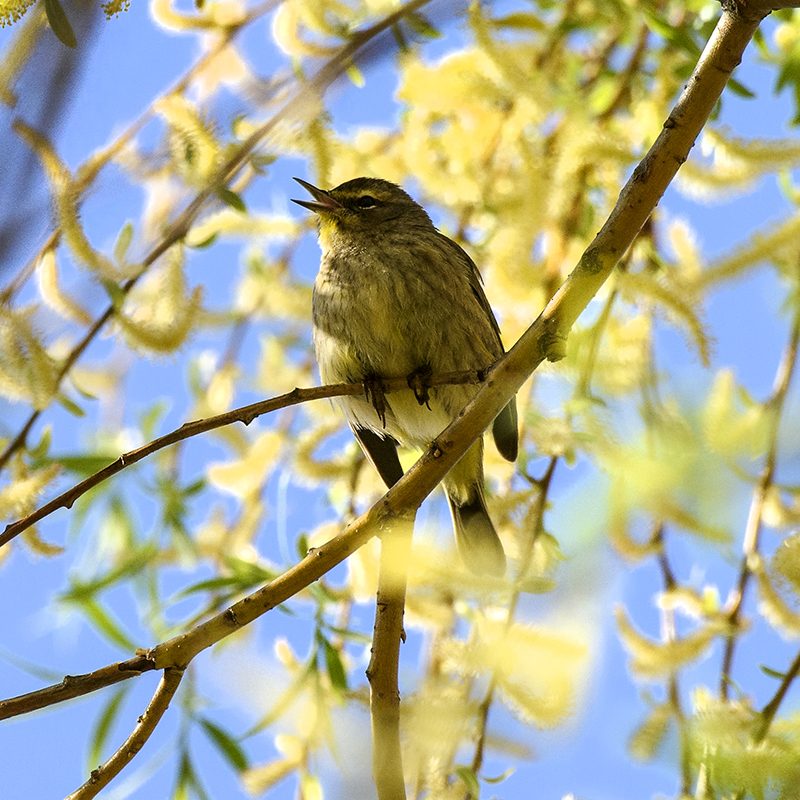
A great place to look for warblers, like this palm warbler (Setophaga palmarum), is in all the willow trees around the Garden.
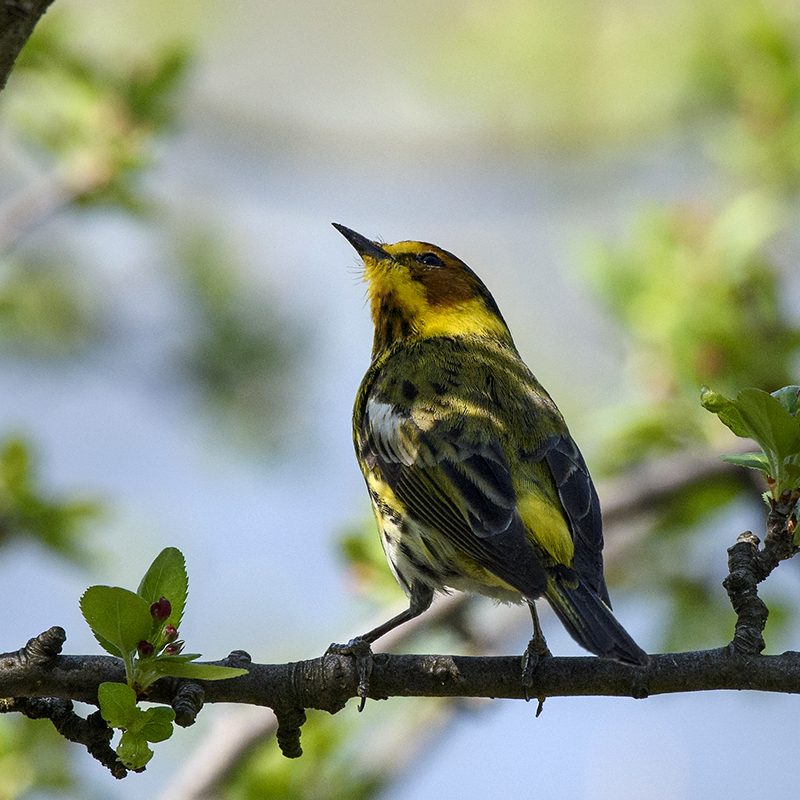
A less common warbler is this beautiful Cape May warbler (Setophaga tigrina).
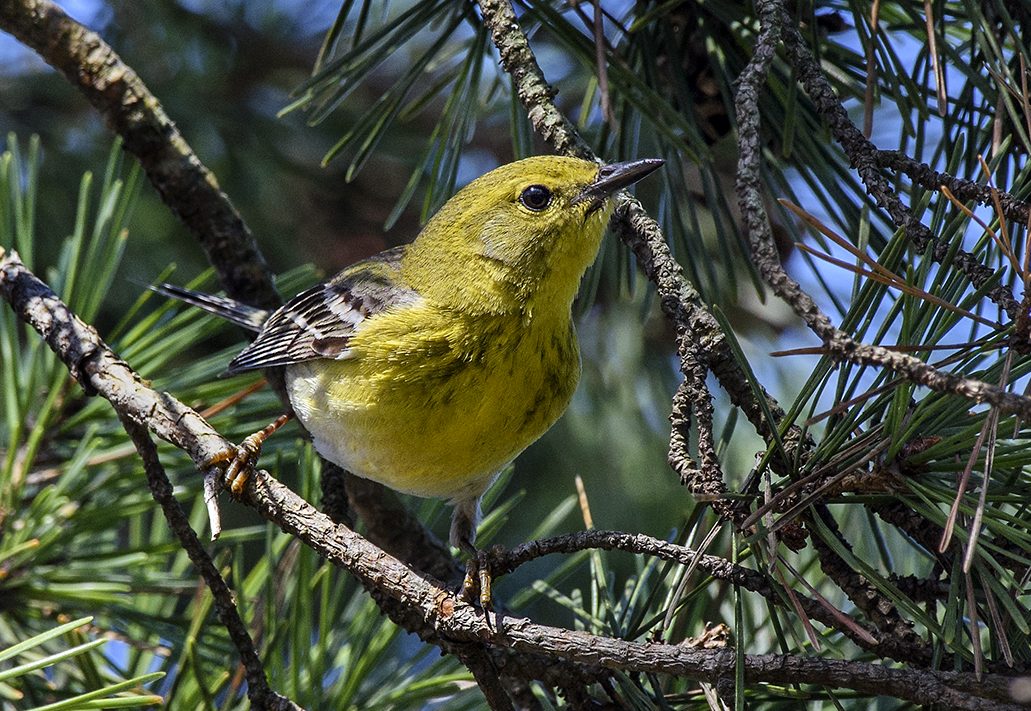
I found this guy, you guessed it, in a pine tree. (He’s a pine warbler, Setophaga pinus.)
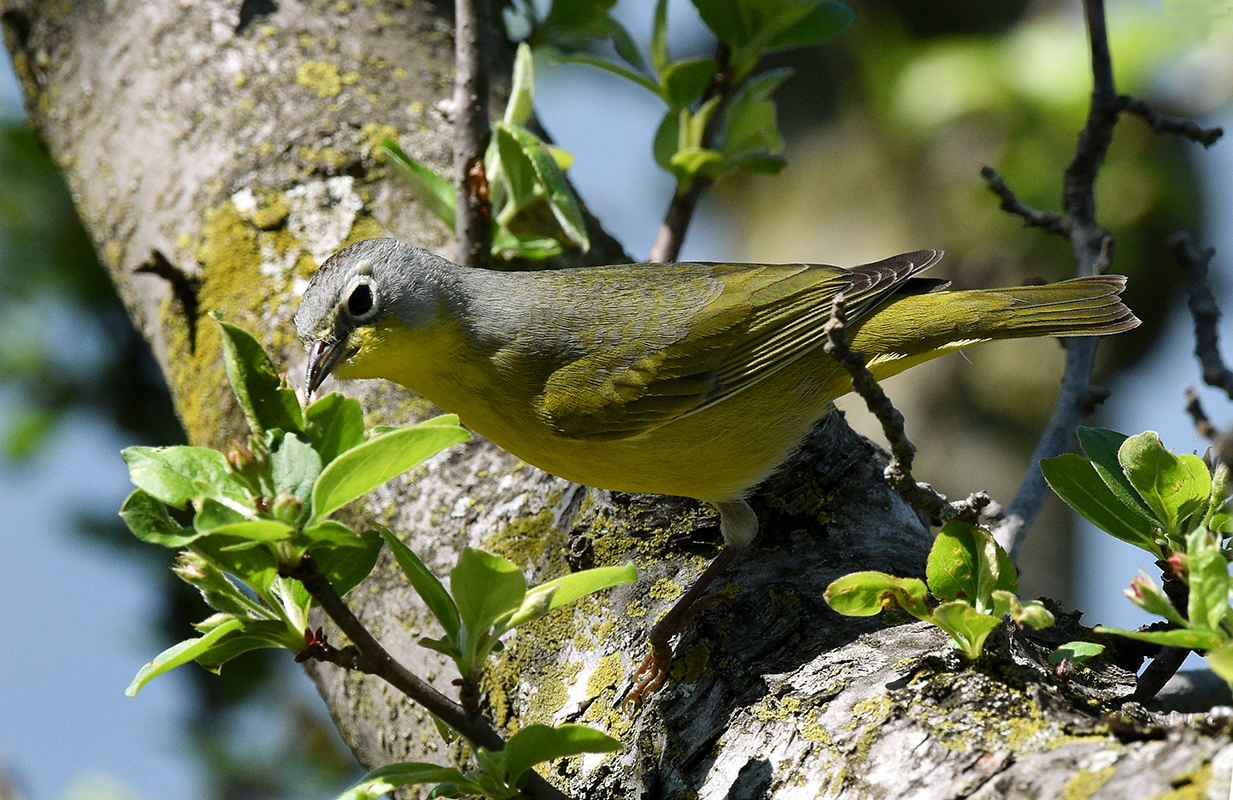
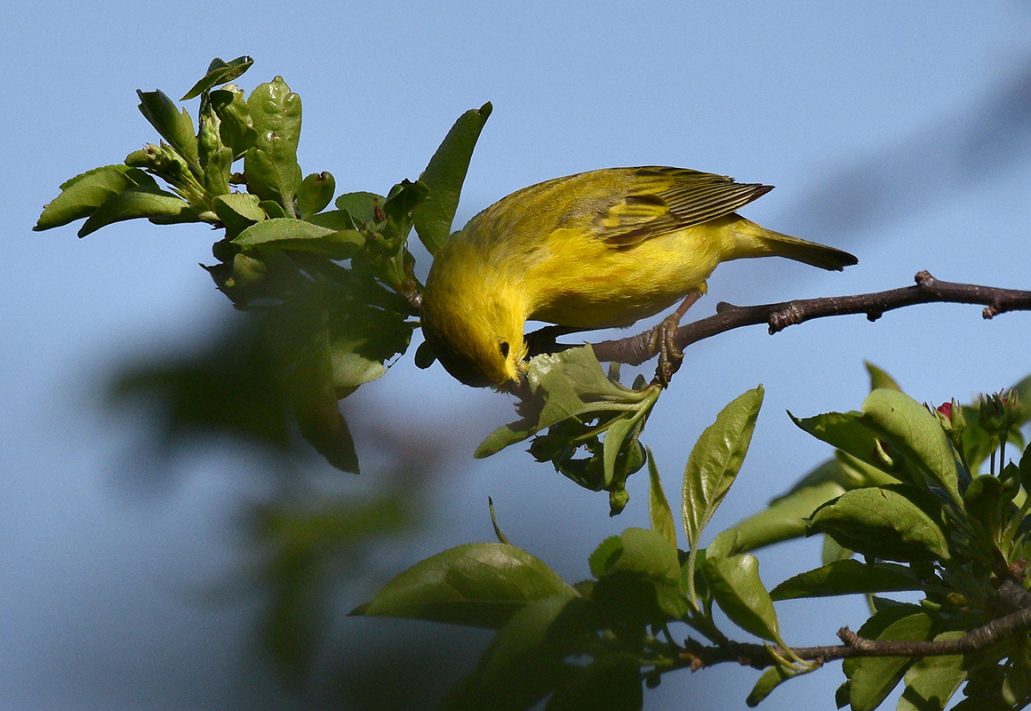
A yellow warbler (Setophaga petechia) looks for insects. These golden birds actually nest at the Garden.
Knowing when they arrive is only half the challenge. Where they will land is the second part. I’ve been surprised on many occasions to find warblers in very public places. If there is a tree, some green, or water, you have a chance at spotting a warbler. If you see a tiny bird, quickly darting in and out of a tree, there is a good chance you have found a warbler. Oaks and willow trees are particular favorites.
The birds need a food supply along the way to fuel their journey. Most of them are insect eaters, and some supplement their diet with seeds and nectar from flowers. While the cold spring delayed the plants a bit, the insects come out as soon as it is above freezing and you can see the birds darting around eating as many as they can. If you want to attract warblers to your yard, plant native trees and shrubs in your yard and be sure to add a shallow water dish.
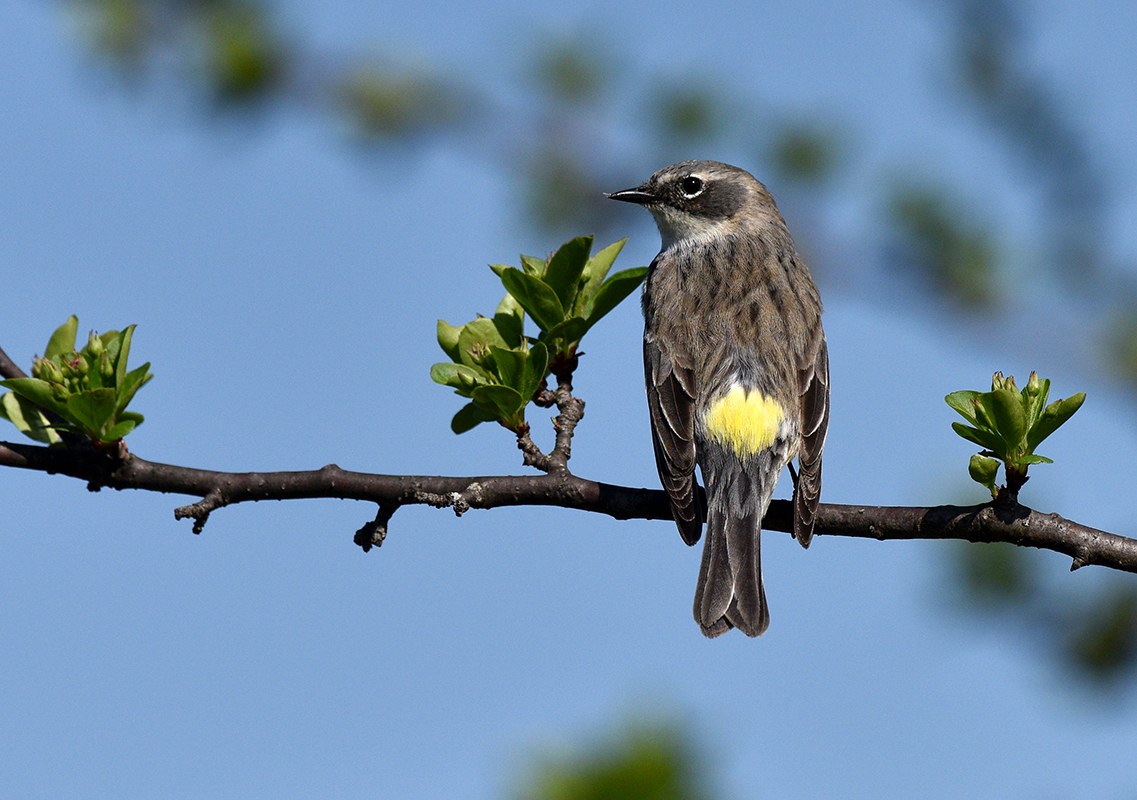
Here you can see how this warbler got its name. The yellow-rumped warbler (Setophaga coronata) is one of the most common warblers you will see here.
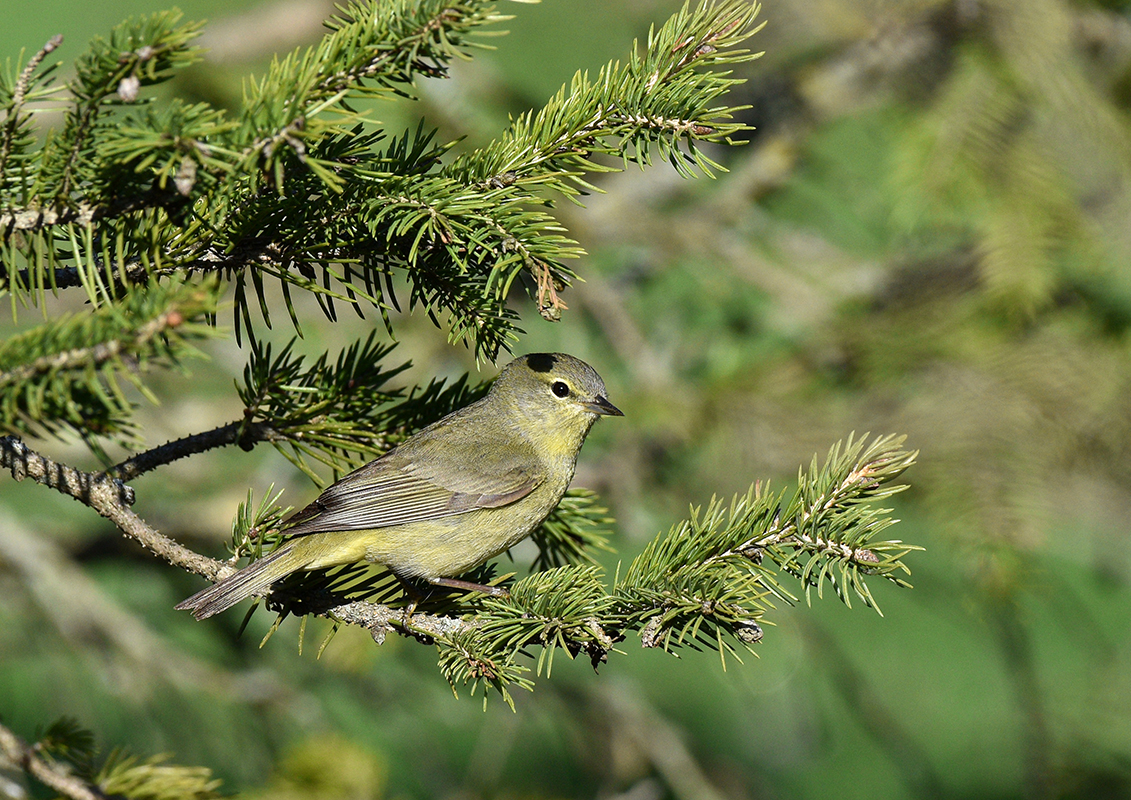
A very understated orange-crowned warbler (Vermivora celata) keeps an eye on me.
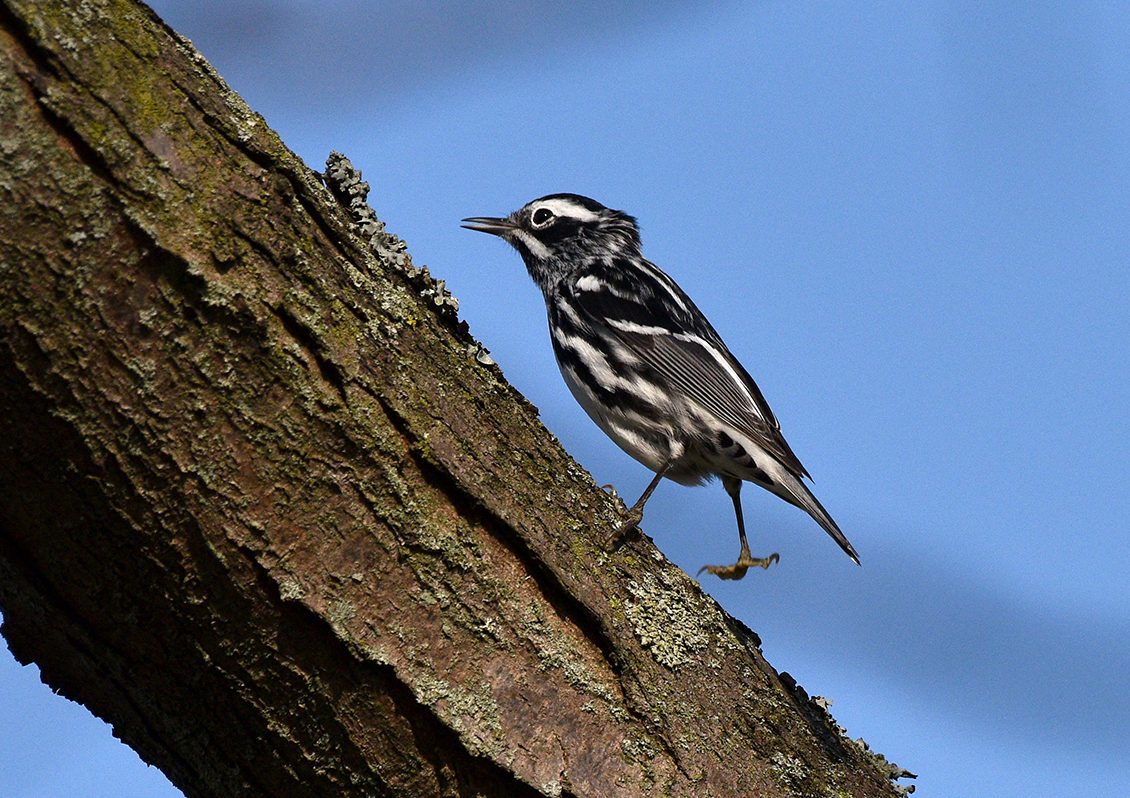
Black-and-white warblers (Mniotilta varia) can be found hopping up and down the bark of trees looking for insects.
Migrating birds are one of nature’s greatest wonders. Different birds migrate at different times of the year, but all told, millions of birds make the trip north and south each year, navigating all sorts of hazards along the way. I am in awe of these tiny birds that travel so many miles. They are the elite athletes of the avian world.
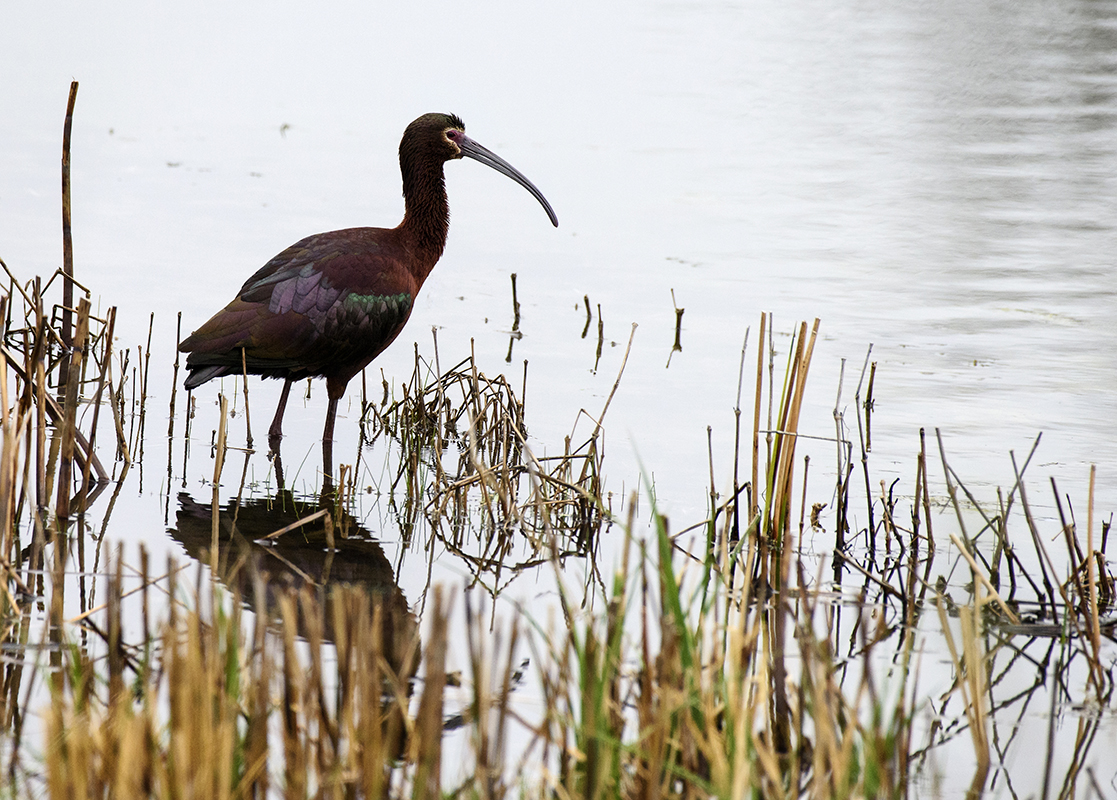
The cooler than average spring did allow a few loons to stay longer than usual around the Garden. It was really fun seeing them stealthily appear from seemingly out of nowhere. A major rarity showed up for just one day, a white-faced ibis. I was lucky to be around to see it; a first for me, and I believe the Garden as well.
Wow, what a treat! I’ve never seen this bird before. White-faced ibis (Plegadis chihi) is a very rare visitor to the area.
The first wave of warblers arrived early in May and many from that group have moved on, although you can still see palm, yellow-rumped, black-and-white, and Nashville warblers at the Garden now. There should be several more waves before the month is over, as well as a few interesting sparrows and vireos. Warblers migrate at slightly different times. There are those that show up at the end of April and early May, those that you will see mid-month, and a few late ones that show up at the very end of the month. I like to go out every day in May, just in case a new wave of warblers has shown up, I hope you will too!
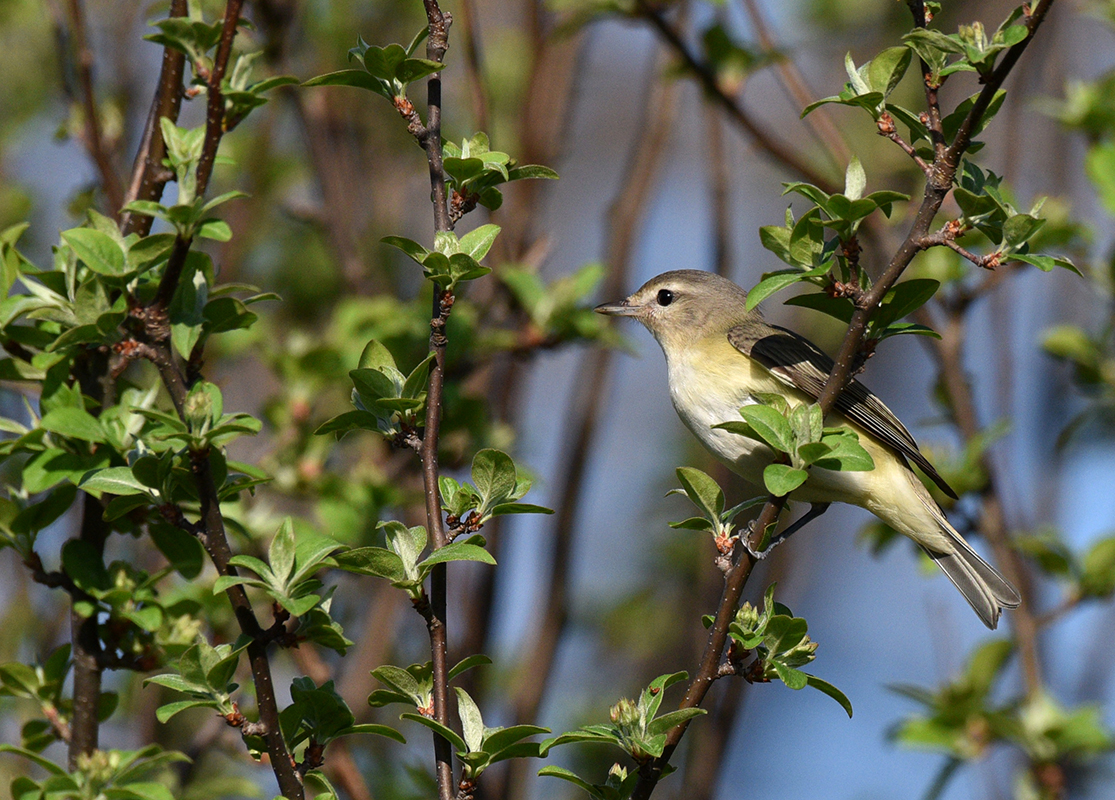
The warbling vireo (Vireo gilvus)—not a warbler, but its song sounds like one.
Join me and #birdthepreserves this month. My top five migration places to visit in the spring are the Chicago Botanic Garden, Montrose Point Bird Sanctuary (the magic hedge) in Chicago, The Grove in Glenview, LaBagh Woods in Chicago, and Ryerson Woods in Deerfield.
To feed, or not to feed, that is the question:
Whether ’tis nobler in the mind to suffer
The slings and arrows of empty bird feeders,
Or to take arms against a sea of winter cold
And by opposing it, feed them.
I hope William Shakespeare doesn’t mind me modifying his famous lines a little, but you get the idea. When winter arrives, we see the birds all fluffed-up out in the cold and wind and snow and feel the need to “save them,” or at least make their lives easier. For the most part, birds are perfectly capable of dealing with the weather and finding food. Most of the birds that are not able to cope have long since migrated south for the winter. Therefore, we mainly feed birds for our own benefit. It provides an opportunity to view birds up close, watch their behavior, and have a sense of doing our part for nature.
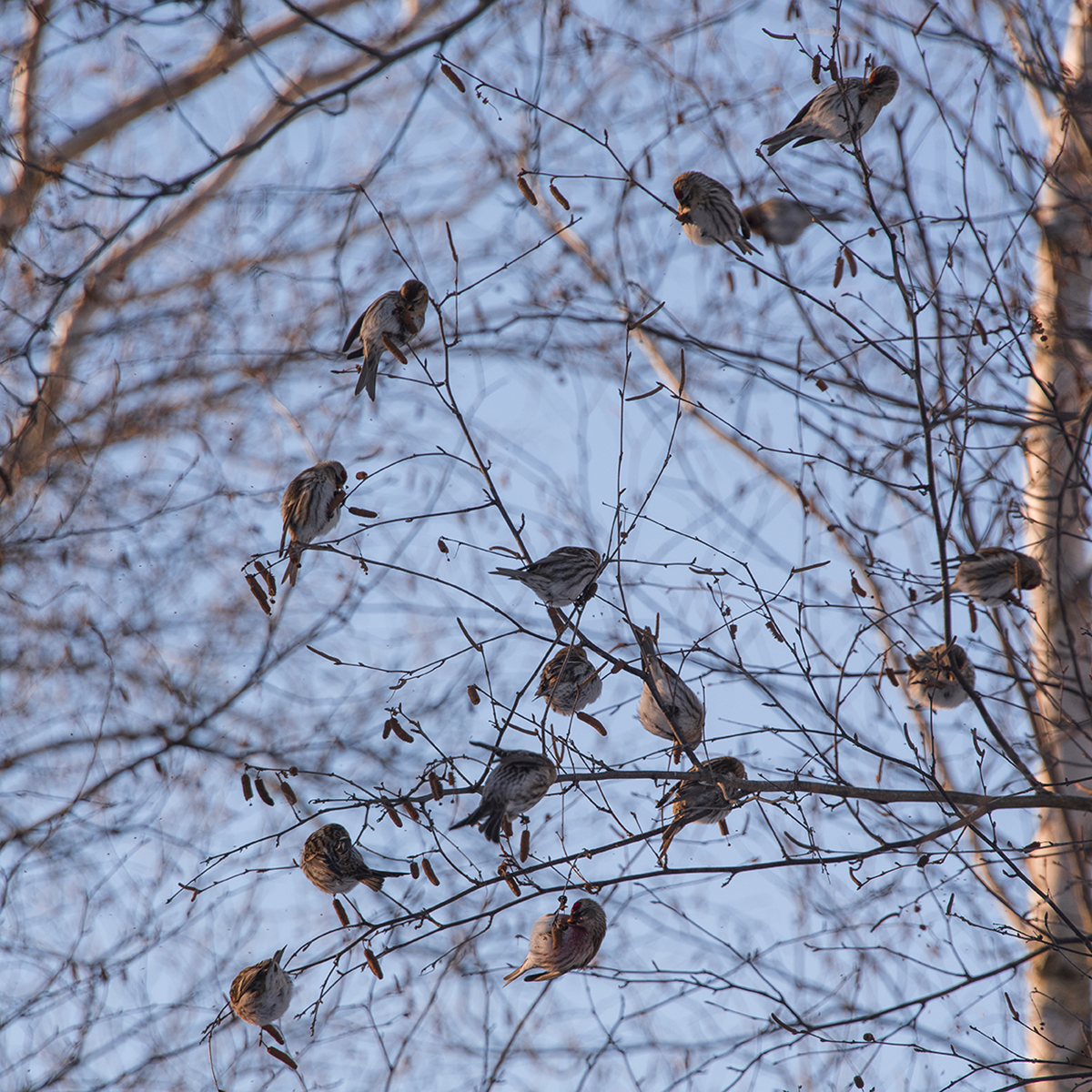
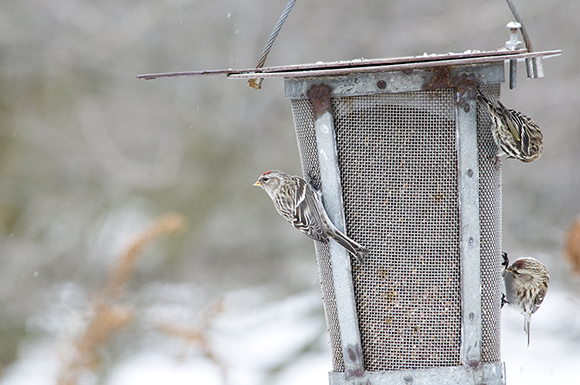
Common redpoll (Acanthis flammea)
There are positive and negative things about feeding birds.
On the negative side, there is the way feeders concentrate many birds in a small area, making it easier for diseases to spread among the population. The concentration also might make them more susceptible to predation. Drawing birds closer to your home can make them susceptible to window collisions. Feeding birds can also attract unwanted animals like rats, pigeons, English sparrows, European starlings, raccoons, and house cats allowed to run outdoors.
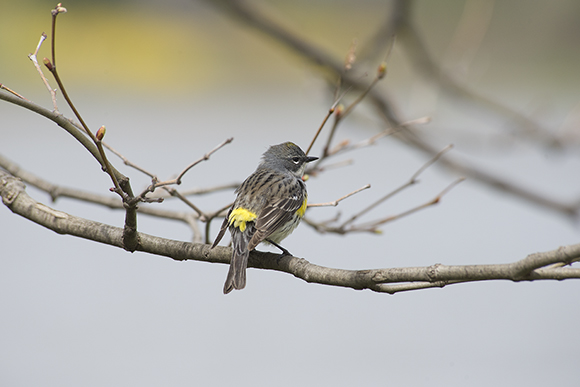
Yellow-rumped warbler (Setophaga coronata)
On the positive side, some studies have shown that access to feeding stations increases winter populations of some species. More chickadees may survive a severe winter if food is provided than if they are totally on their own. (There is the question of whether it is truly a benefit to the population to have more individuals survive if some of those individuals are weak, genetically compromised, or carrying disease, but that is another matter.)
I think the greatest benefit to feeding birds is the connection it provides between people and nature.
In a society when people have become much more distanced from nature, feeding birds is perhaps the simplest and easiest way to make that connection. This important link to nature far outweighs any negative impacts of bird feeding. For instance, one additional benefit is the opportunity to get involved in citizen science projects. The Cornell Lab of Ornithology in New York has a Feeder Watch Program that allows members of the public to collect important population data on birds visiting their yards. It is also possible to reduce negative impacts by following a few general rules.
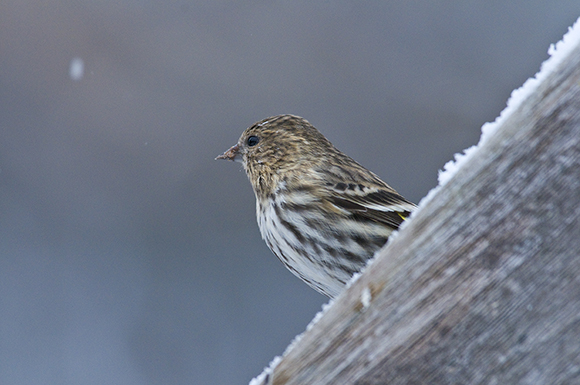
Pine siskin (Spinus pinus)
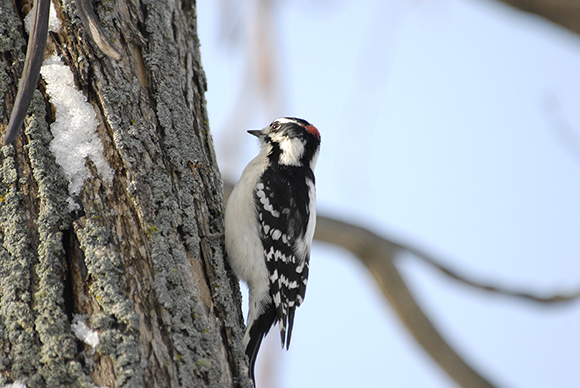
Downy woodpecker (Picoides pubescens)
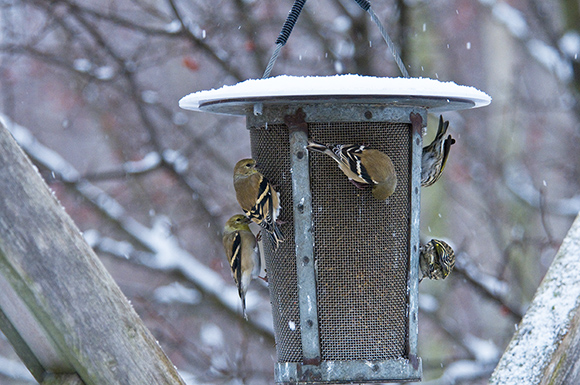
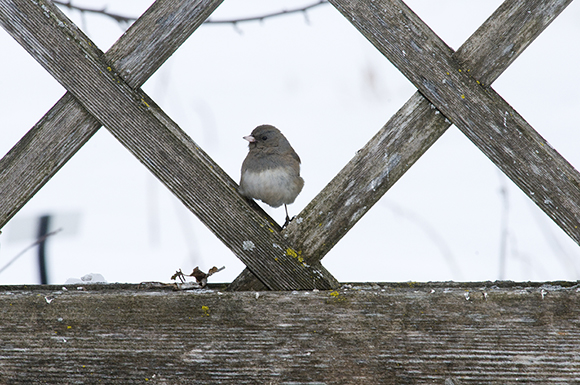
Generally, feeding birds above ground in some type of feeder is better than placing food on the ground. This will limit the number of mammals that are attracted to the feeding station. The type of feeder can limit the size and types of birds you want to feed. Tubular feeders with small (or no) perches tend to prevent large birds from accessing the food. Tubular thistle feeders have very small holes designed to provide access to the small thistle seed, limiting use to species like goldfinches, siskins, and redpolls. Applying any of a number of guards to the pole or line that supports the feeder can prevent mammals like squirrels and raccoons from getting to the feeder. If you do want to place food on the ground for ground-feeding birds like juncos and tree sparrows, place only small quantities of seed on the ground so it gets used up before the end of the day.
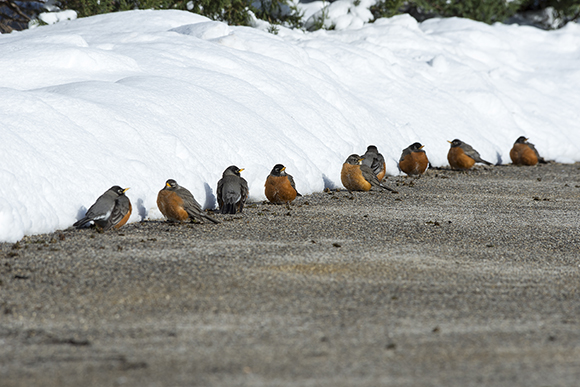
Robins (Turdus americanus) warm themselves on sun-heated pavement.
It is also important to think about cover for the birds. It is better to place a feeder where birds have access to some type of cover, like shrubs or evergreens. This gives them an escape route if predators—like hawks—show up. Trees and shrubs can also moderate climatic conditions around the feeder.
Keeping feeders reasonably clean is also important when it comes to reducing any disease problems that might occurs as you draw more birds to your yard. This is particularly important for tubular feeders, where birds are in much closer contact with the feeder. Washing with a weak bleach solution periodically is recommended.
What kind of food should you provide to the birds? Almost every study I have ever seen has found that the small black-oil sunflower seed is the seed preferred by the greatest variety of birds. When a seed is preferred by more species, there is less seed that gets wasted or scattered on the ground to attract unwanted birds and mammals. Although woodpeckers will also use the small sunflower seeds, they much prefer suet feeders. When shopping for suet, try to find brands that are primarily animal fat with few other ingredients like corn, millet, or milo seed.
American goldfinches (Spinus tristis) in winter plumage
Slate-colored dark-eyed junco (Junco hyemalis)
Some ingredients that are beneficial are peanut pieces, hulled sunflower seed, and pieces of fruit. Generally, suet feeders do not have perches, so this limits the birds that can access the food. (One exception is the European starling that can be a problem on suet feeders. I have found that placing suet on the underside of a board allows access to woodpeckers and nuthatches, but makes it much more difficult for starlings to hang on.) Another benefit of suet is that it provides food for migrating birds that may have remained behind for various reasons. We have a yellow-rumped warbler visiting our suet feeder on a daily basis. Thistle seed is especially attractive to a variety of winter finch species. Because of its small size, it generally requires using specially designed feeders that cater to small finch species. In most cases, the cheaper brands of mixed seed often contain unpreferred seeds that serve as fillers in the mixes. It is better to avoid these, as they can produce increased waste grain that can attract unwanted guests.
Water is another good thing to provide for birds in winter. Obviously, most water sources are frozen, so it is necessary to use a bird bath heater to keep water open and available in the cold. Another nice thing about water is that it will attract birds that might not normally visit a feeding station, especially as temperatures warm up. Some people who have kept a species list for birds visiting their yards have found that their list more than doubles once water is provided.
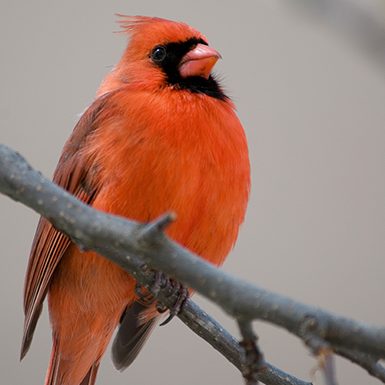
Northern cardinal (Cardinalis cardinalis)
One last point to keep in mind is that the appearance of birds at your feeder can change due to fluctuating weather patterns. If we experience a period of mild weather, the birds may be off finding naturally available food and not find it necessary to come to you feeder. You may experience a week or more when almost no birds show up at your feeder. This is a normal occurrence and should not be considered an indication of some environmental problem affecting the health of the local bird population.
So if you have a desire to get more involved with the birds in your yard, follow these few simple guidelines and let the enjoyment begin.
Come #birdthepreserves with the FPDCC; view the list of upcoming events for free events near you.
In the middle of the night, an 8-inch bundle of feathers and hollow bones projects a haunting, mysterious sound. It sounds like the rising and falling whinny of a horse, followed by a piercing tremolo. Though it sounds far away, the bird—an eastern screech-owl—could likely be right above your head (that is, if you are out in the middle of the woods at night).
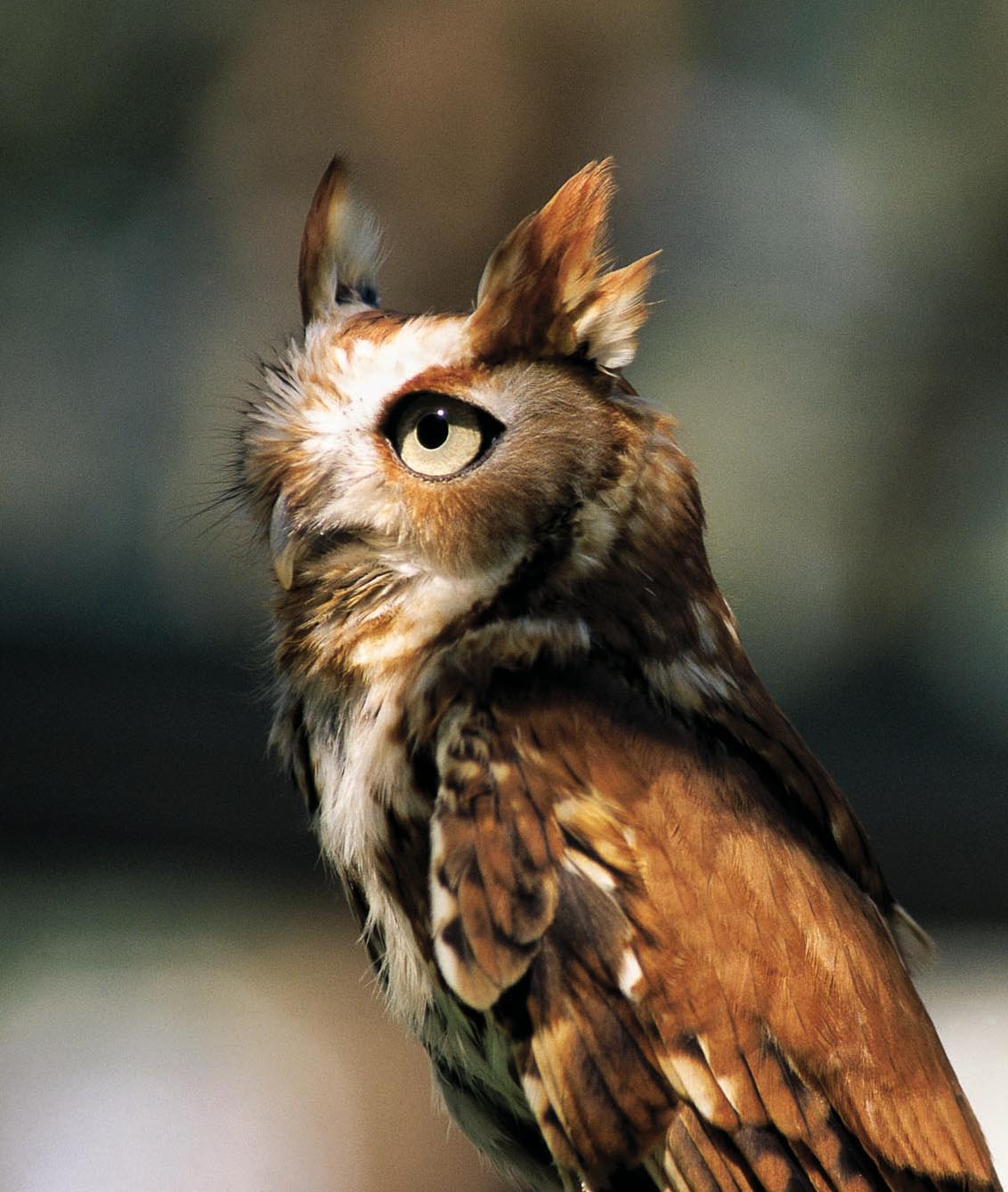
A year-round, common resident of northern Illinois, the eastern screech-owl, (Megascops asio) is primarily found in woodlands; it prefers trees with natural cavities near a field with a stream or shallow river. But it can also be found in wooded residential neighborhoods, possibly even in your backyard. It could be lurking in a small tree cavity during the day, snoozing while waiting for its evening foray to your back porch light to catch a moth.
The eastern screech-owl comes in two color morphs—red (rufous) and gray. Ornithologists aren’t sure why, but they do know parent morphs of the same or different colors can producer young of either color. Those who get a look at this owl under moonlight or in its daytime roosting hole will see a dark streaking on the owl’s breast that blends well with the tree’s bark. It has a 20-inch wingspan, piercing yellow eyes, and tiny ear tufts. (Actually, these are not ears, but rather feather tufts it can move to communicate or use for camouflage.) As with most owls, the ears of the eastern screech-owl are situated asymmetrically on either side of its head—one is higher than the other. This arrangement enables it to zero in on its prey through triangulation, by turning its head to the left and right and moving it up and down a few times.
The Chicago Botanic Garden regularly holds programs offering visitors a chance to learn about the habits of Illinois owls as well as hear and see the diminutive eastern screech-owl. Join us for our next Owl Prowl sessions.
These owls will nest in a natural cavity or man-made nest box, adding no material of their own. The female lays four to five white, round eggs and incubates them for about 26 days. The male brings her food when she’s on the eggs and also after they hatch. She breaks up the prey into morsels to feed her young. In another 26 to 30 days, the young fledge, but they remain dependent on the parents for food for a few months longer before heading out on their own to hunt.
What do they hunt? An eclectic diet: eastern screech-owls eat moles, mice, shrews, and flying squirrels year-round, but also prey on cicadas, crickets, moths, and worms during warmer months. Like other owls, the screech-owl regurgitates pellets that contain undigestible fur and bones. Finding pellets beneath a tree is one clue to its presence.
You can purchase screech-owl boxes and hang them in a tree in your wooded backyard with hopes of attracting them to nest. At night, listen for the mysterious whinny of the screech-owl near a woodland. You never know how close one may be. Or on a sunny day, especially in winter, look at natural cavities and trees—you might see a screech-owl snoozing at the entrance.
The eastern screech-owl is the October bird species highlighted by the Forest Preserves of Cook County. Come #birdthepreserves with the FPDCC; view the list of upcoming events for free events near you.
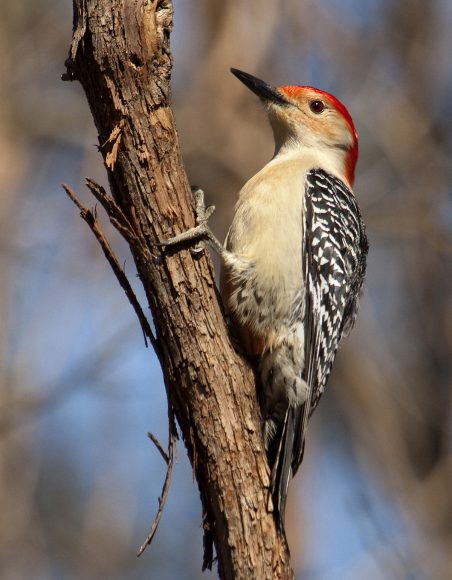
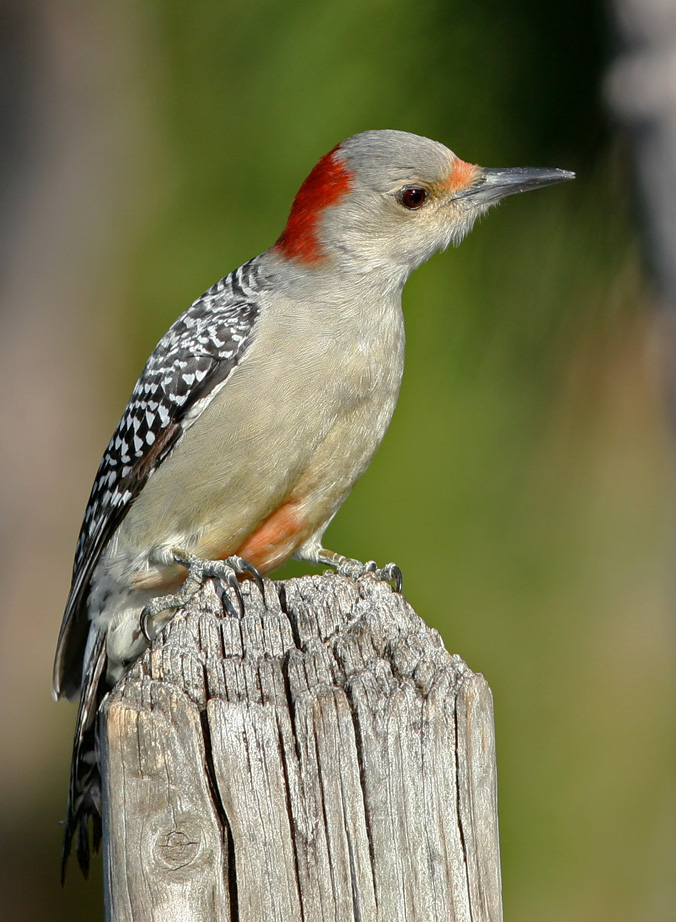
When someone first hears the name of the red-bellied woodpecker, it doesn’t make sense. The bird has a bright red crown and nape, but where’s the red belly? Actually, there is a small pinkish tinge on the bird’s stomach, but it’s difficult to see unless you look for it with binoculars (and if it’s not covered with gray feathers).
Unfortunately, the name “red-headed woodpecker” was already taken by another bird—incidentally, much rarer in northern Illinois—so ornithologists named this common, year-round bird the red-bellied woodpecker.
The red-bellied woodpecker (Melanerpes carolinus) has creamy-to-white underparts, and a black-and-white, zebra-patterned back. The male’s forehead is red; the female’s is creamy white. (By contrast, the red-headed woodpecker’s entire head is blood red, and its back is solid black with white patches on the wings.) The red-bellied woodpecker’s preferred year-round habitat is woodlands, and the oak, pine hardwood, and maple forests of the eastern United States. Occasionally, it can be found in wooded suburban neighborhoods.
Woodpeckers have long, barbed tongues. A woodpecker’s tongue is so long that when it is not extending it to grab a meal deep within a crevice, it pulls it in, and wraps it around the inside back wall of its skull, almost to its nostril holes. Because they can get food from deep within a tree instead of relying on what is readily available, they are well-suited to spend winter in northern Illinois, when other insect-eating birds need to move south.
If a red-bellied woodpecker visits your yard, you may be able to observe some interesting behavior: the woodpecker puts a nut into the crevice of tree bark, then hits the nut with its beak to get to the yummy morsel inside. It also may store the food there to eat later.
The woodpecker makes its presence known in woodlands and yards or at feeders by calling “querr” or “cherr-cherr” several times, or giving various chattering sounds. Its boisterous noises and colorful plumage add cheer to a cold winter’s day.
In February or March, the male red-bellied woodpecker begins seeking places to excavate cylindrical cavities—in dead trees or dead limbs of trees—and enticing a female to mate and lay eggs, which happens in late March and early April.
As with many birds, red-bellied woodpeckers will nest in the same location year after year. The male typically builds a new cavity—often in the same tree, near the old one—each season. The nest cavity is from 10 to 14 inches deep and usually built on a limb (as opposed to the trunk). The female lays four to five white eggs each season, and both parents incubate the eggs for about 12 days and take care of the nestlings, which fledge in another 24 to 27 days.
Numbers of this beautiful, common bird have grown across most of its range over the past 50 years, according to the North American Breeding Bird Survey. Once most common and found mostly in central and southern Illinois, it has expanded its range northward in the state in the past century, including into northern Illinois, where it had been decidedly rare in the early twentieth century.
The red-bellied woodpecker is the November bird species highlighted by the Forest Preserves of Cook County. Come #birdthepreserves with the Forest Preserves; view the list of upcoming events for free events near you.
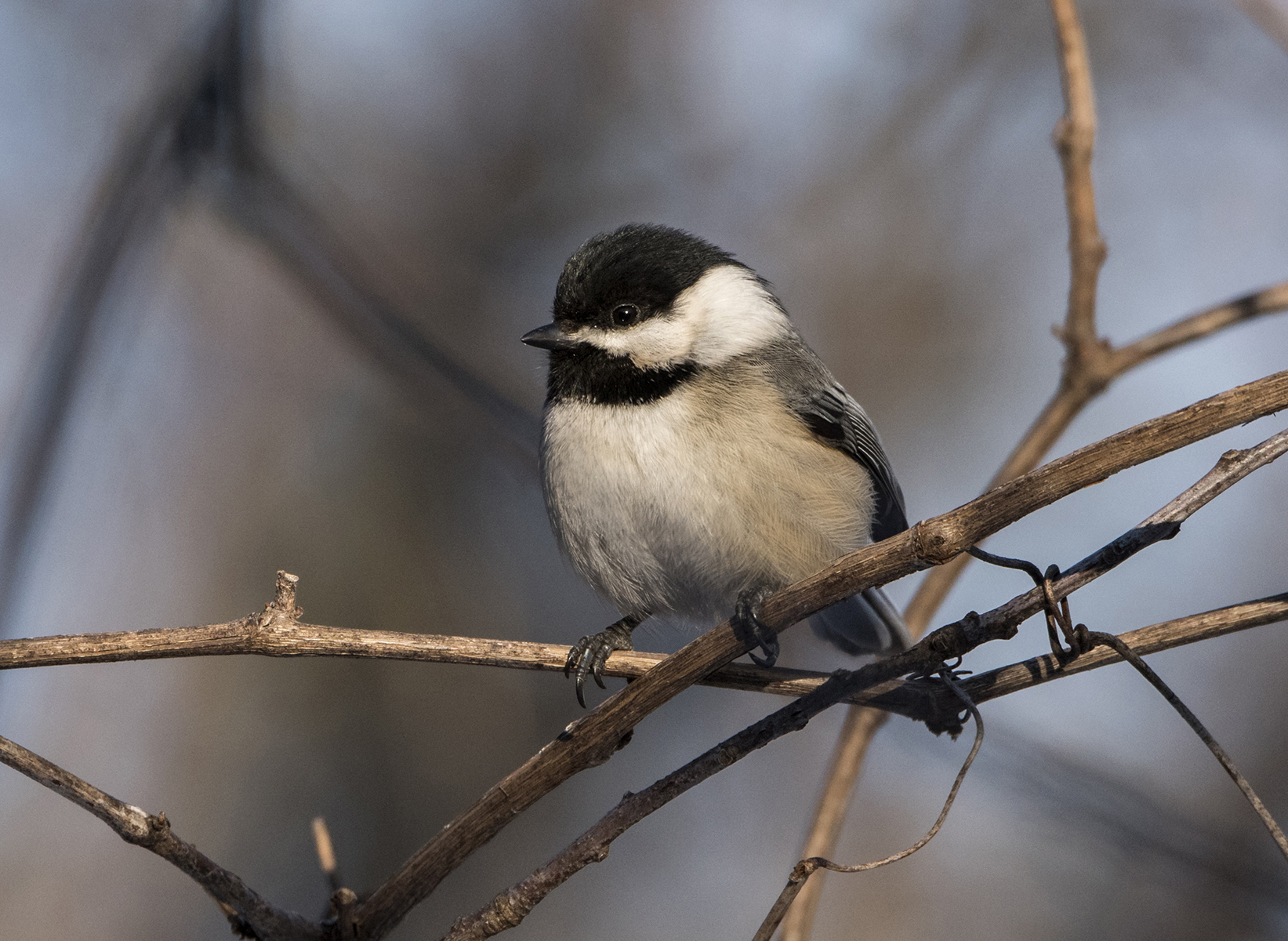
Most people recognize that familiar call of the black-capped chickadee. It’s often heard in late summer and fall as chickadees gather in family groups and small feeding flocks to prepare for the winter.
The chickadee’s song—translated as “Hey, sweetie,” (though you can’t often hear the third syllable)—is reserved for late winter, spring, and summer, when the bird is courting and nesting. Nothing brightens a mid-February day more than when a chickadee sings because to those who hear it, the song signals spring’s arrival.
The black-capped chickadee is the September bird species highlighted by the Forest Preserves of Cook County. Come #birdthepreserves with the FPDCC; there is a free walk at the GardenonSeptember 17, 7:30 to 9 a.m.
The black-capped chickadee is considered a non-migratory species—it can survive the harsh winters of northern Illinois. These birds can lower their body temperature when sleeping at night, which protects them from freezing.
While some birds need to leave the region in fall because insects and other food will soon become difficult to find, chickadees know how to find insect larvae overwintering in tree bark (although flocks of chickadees do make small geographic movements, depending on food availability in colder months).
They also stash seeds to eat later, and unlike squirrels, they remember where they put them. Chickadees eat berries and animal fat in winter, and they readily come to feeders feasting on seeds and suet. Supplemental food, especially sunflower seed from feeders has been shown to help these little balls of feather and hollow bones survive when it gets really cold and wet outside. Those who feed birds can observe an interesting behavior in chickadees—they form a hierarchy, meaning the top chickadee gets to eat at the feeder first—it snatches a seed and leaves, then the second in command gets its turn.
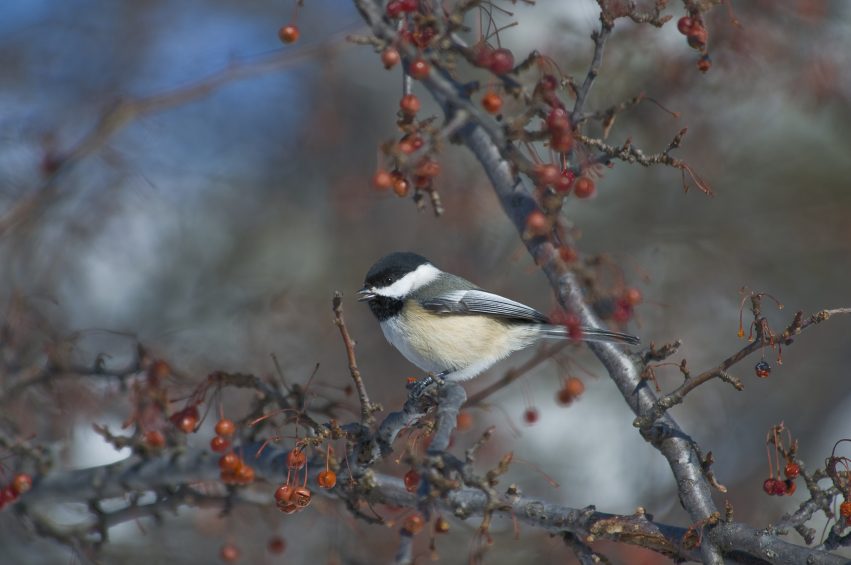
A black-capped chickadee enjoys a plentiful and tasty treat in early February: berries.
In February, chickadees begin singing and looking for a cavity hole in which to nest—and there’s a wide variety of homes they’ll find suitable. They’ll choose abandoned woodpecker cavities and man-made nest boxes, or excavate their own small, natural cavities. Chickadees will nest in rotted, old wooden fence posts and abandoned mailboxes, and a pair once built a nest in an old shoe hanging from a line.
The female builds a cup-shaped nest with moss for the foundation, lining it with rabbit fur or other soft material. She has one brood each year, laying an average of seven to eight eggs. After 12 days of incubation, the young hatch, then remain in the nest for another 16 days. When they fledge, they continue to follow their parents, calling and begging for food. Come winter, they travel in small feeding groups, often with nuthatches, titmice, and other small songbirds.
West Nile, which came to the U.S. about 17 years ago, likely may not have affected black-capped chickadees as much as some thought, according to a recent study.
Though people were seeing fewer chickadees in their backyards and in woodlands when the virus came to the region, a 2015 study showed that overall black-capped chickadee numbers have not been affected by the mosquito-borne disease, especially compared with other species. Studies will continue on how the virus is affecting bird populations—but one thing is for certain—when the virus struck, it reminded humans not to take for granted the common birds they enjoy. And the black-capped chickadee is certainly a species that humans enjoy watching and hearing.