These posts offer previews or behind-the-scenes information on some of the Garden’s special events. Learn what it takes to put together these exquisite events and then come see them in person!
Take a peek in your closet, and you might find a long wooden broom for sweeping up dust or offering rides to witches and wizards. For broom maker John Spannagel of Hidalgo, Illinois, brooms are more than just a pantry item. They’re a labor of love, made with a special ingredient: broomcorn.
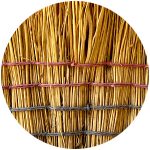
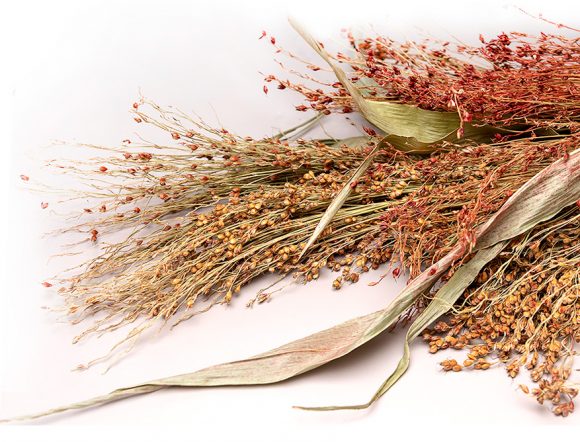
Broomcorn is a type of ornamental grass used to make specialty brooms, a passion Spannagel discovered nearly three years ago. The retired construction worker makes roughly 50 brooms a year and tours at local farm shows. As part of the Chicago Botanic Garden’s Harvest Weekend, September 29 to 30, Spannagel will bring his broom-making machines to the Garden to demonstrate broomcorn broom-making.
We caught up with Spannagel to learn a little about his craft:
What is broomcorn? (Spoiler: It’s not corn)
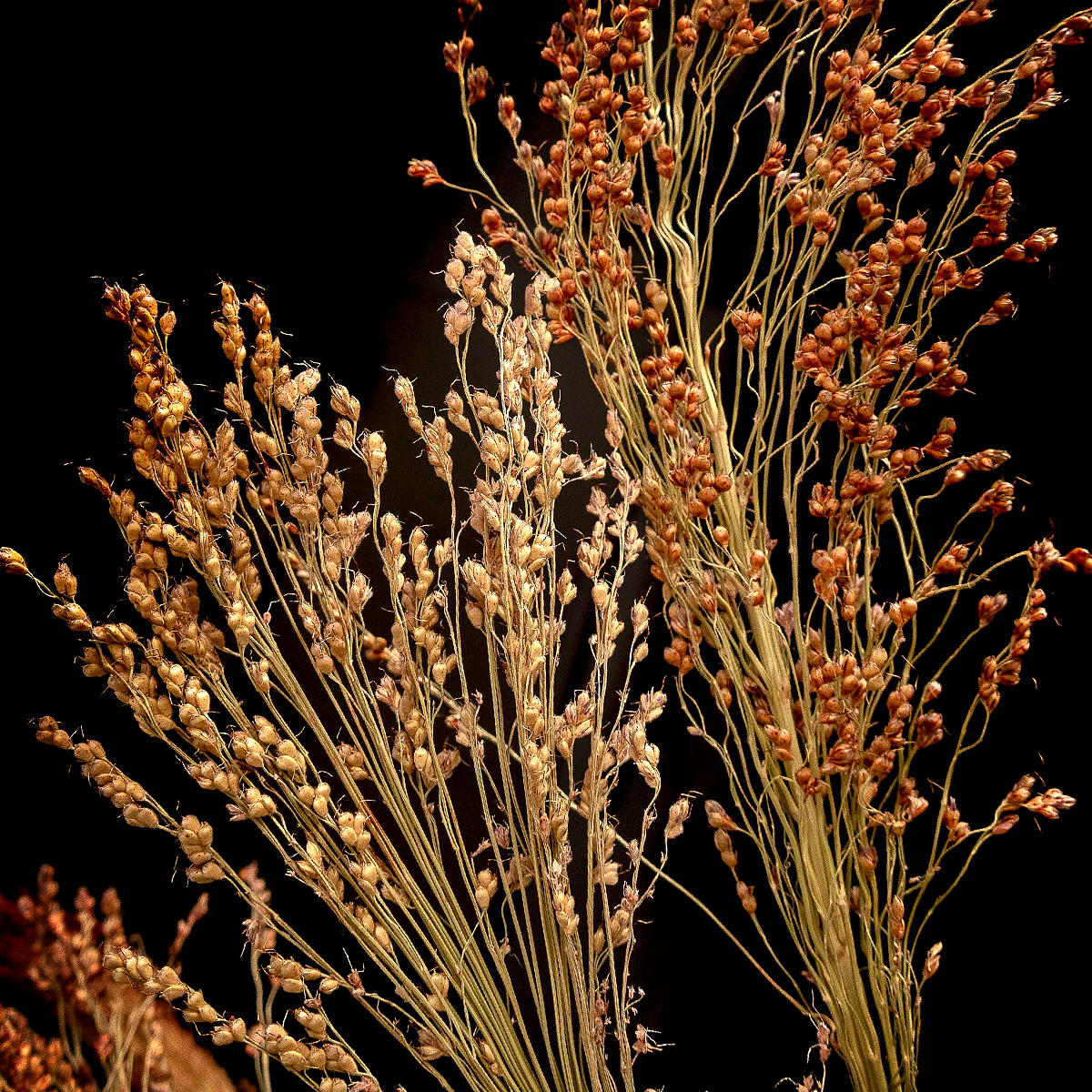
Broomcorn (Sorghum vulgare var. technicum) is an annual ornamental grass. It has no “ears” or “cobs,” and it can grow anywhere from 12 to 14 feet tall. Broomcorn seeds are planted in the early spring, and stalks are harvested in mid- to late August. The long woody stalks have tassels of flowers and seeds at the tips, which are removed during broom-making. You can find broomcorn growing in the Garden’s Regenstein Fruit & Vegetable Garden.
Where does broomcorn come from?
Broomcorn originated in central Africa, where it eventually spread to the Mediterranean. Benjamin Franklin is credited with first bringing broomcorn to the United States in the 1700s, says Spannagel. Commercial production of broomcorn flourished in Illinois, one of the leading producers of broomcorn in the 1860s. Nearly a century later, commercial broomcorn production slowed to a halt due to low demand and labor-intensive harvesting methods.
How do you make brooms with broomcorn?
Broomcorn broom-making is a lengthy process that starts with planting broomcorn seeds in the spring. When broomcorn is harvested, the stalks are run through a threshing machine to remove their seeds. The stalks are then laid on a broomcorn crib to dry for a few weeks. Once the stalks are dried, Spannagel uses broom-making equipment, including an antique kick-winder machine to wind straw around a broom stick; straw cutter; and broom press.
How much broomcorn is used to make a broom?
Spannagel orders his broomcorn from a supplier, and uses seven bundles of straw to make a broom. It takes about 45 minutes to make each broom. “Each of my brooms is a little different, and that’s okay,” says Spannagel.
So, what do you do with a broomcorn broom?
Most of the people who buy Spannagel’s brooms use them to sweep, but many others use them as decorations. Spannagel says as long as you take care of your broomcorn broom, it should last up to 15 years. Be sure to store them upside down or hang them so that that the bristles don’t bend. And always keep them dry; if the broom gets wet, let them air dry.
Hear more and see Spannagel’s broom-making in action at Harvest Weekend, September 29 to 30, at the Regenstein Fruit & Vegetable Garden.
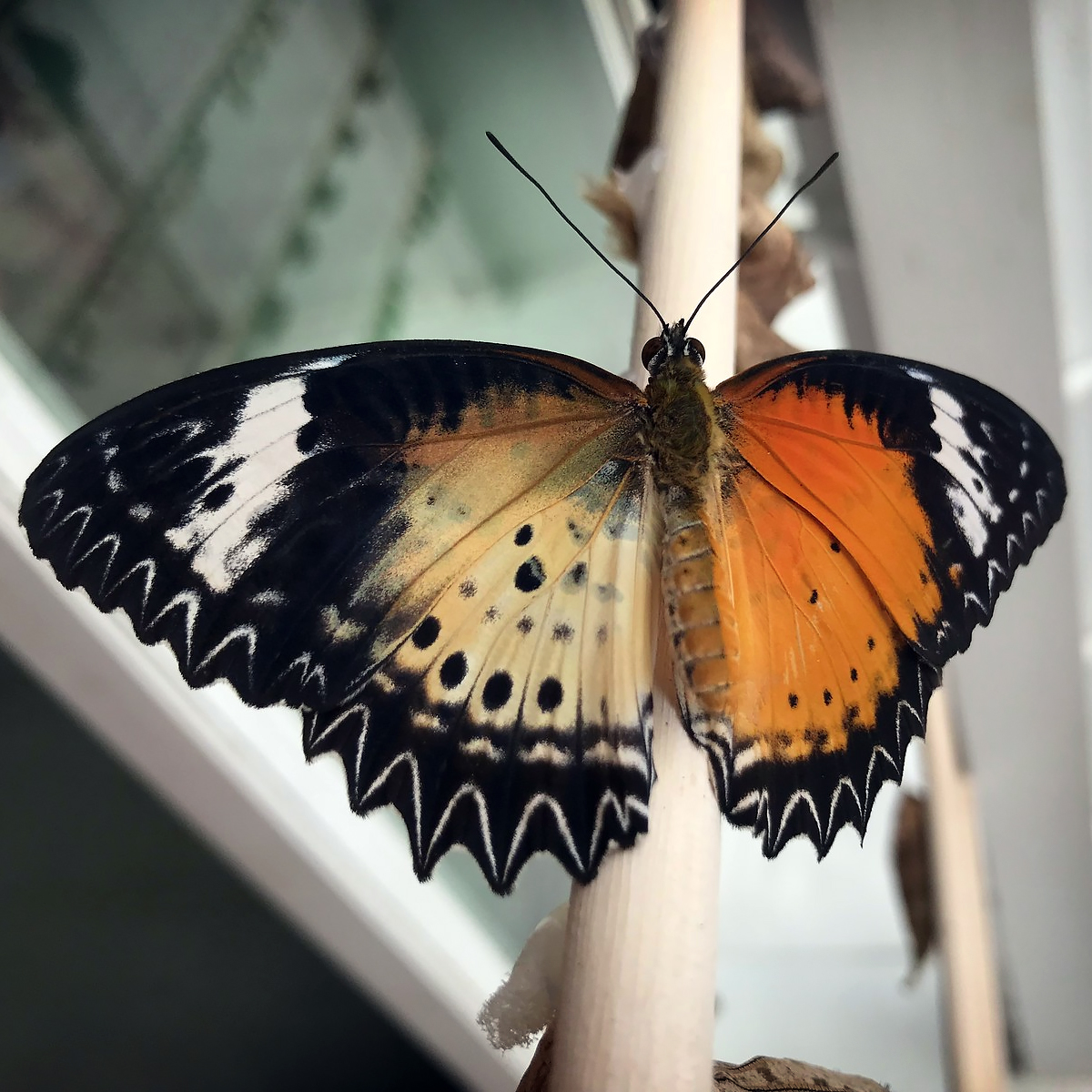
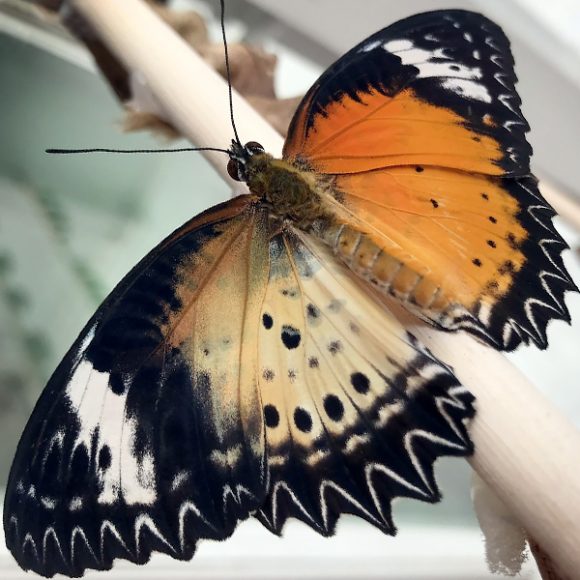
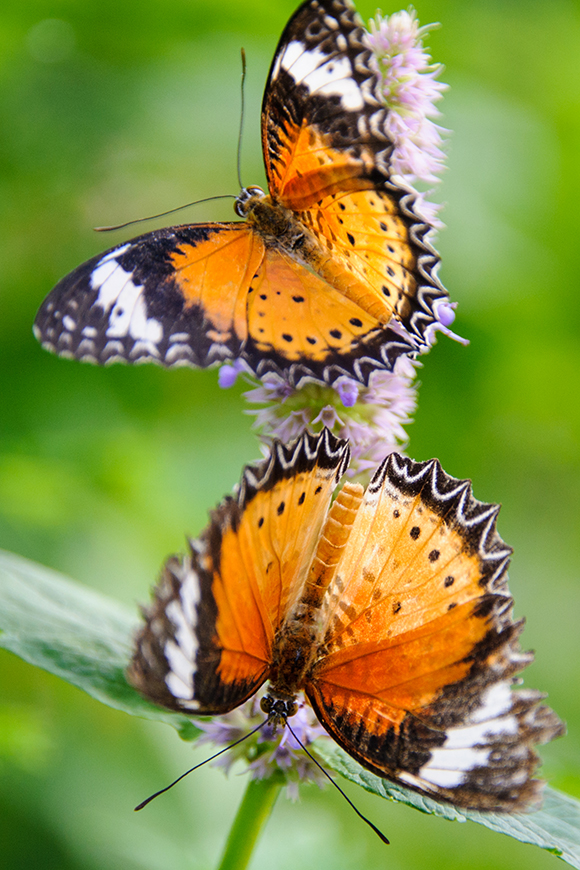
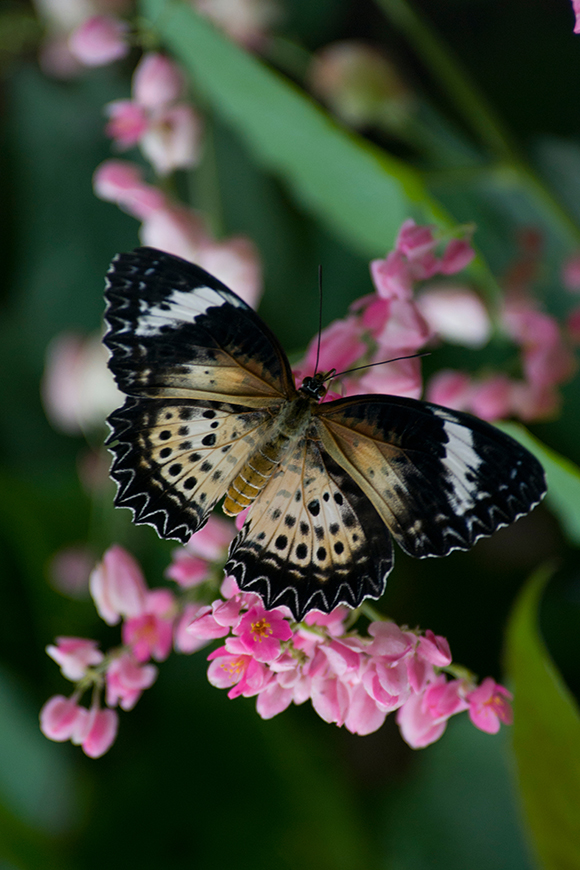
At Butterflies & Blooms on Monday, I saw something I had never seen before in my five years as a butterfly wrangler at the Chicago Botanic Garden. I noticed that a leopard lacewing’s right wings were bright orange, just like any other male of the species, but the left wings were beige—only females have beige wings. This lacewing was half male and half female, or a gynandromorphic butterfly.
Underside of the gynandromorphic leopard lacewing
Topside of the gynandromorphic leopard lacewing
That morning, when I had discovered the male-female lacewing, butterfly visitors had been waiting for me to release butterflies from the pupae chamber. So I packed up the lacewing, with all of the other newborns. I then released each of the two dozen butterflies that had hatched that morning, saving our special discovery for last. I got everyone’s attention and announced, “This is extremely rare! As a butterfly wrangler, I have released many thousands of butterflies, but this is the one and only butterfly that is literally half male and half female!” The visitors were fascinated by the lacewing, which sat on the tip of my finger. Then it took flight and was free in the blink of an eye. Luckily, one of our volunteers snapped some beautiful photos.
Later, it occurred to me that this specimen could actually be a valuable contribution to science, and if nothing else, something that everyone should get a chance to see. I tried to find and capture it so an expert could take a closer look. A full day went by without anyone seeing it. I was afraid we had missed an opportunity to contribute something special to the scientific community, but our luck was about to change.
On Wednesday morning, I was chatting with a young butterfly enthusiast about the gynandromorphic lacewing. I asked him if he could keep an eye out and possibly help me find it. He said, “Oh, you mean like this one?” He turned and pointed to the rare creature, which was sunbathing just behind his head. I couldn’t believe it. I offered to name the butterfly after him, but he modestly declined. I’m still trying to reach out to experts. Meanwhile, after that, I brought the special butterfly back into the pupae chamber, where it has been on display to visitors. I have been feeding it by hand, using a piece of foam dipped in fruit juice and Gatorade, which the butterfly seems to love.
Here is a little information about gynandromorphism. Gynandromorphs are very rare, but can be found in birds, fish, crustaceans, and butterflies, among other organisms. Usually, gynandromorphs have an uneven mixture of male and female features, but our special butterfly has an even rarer form of gynandromorphism because the male and female traits are bilateral, meaning they are split perfectly down the center of the body. How rare are we talking? In a 1980s study, only five out of 30,000 butterflies displayed gynandromorphism.
So how does gynandromorphism occur? There are several possibilities having to do with mishaps that occur during early cell division. Butterflies have a W and a Z chromosome for female and male, respectively. Sometimes, the W and Z chromosomes get stuck together during cell division, resulting in a mixture of male and female traits. In another scenario, the embryo is “double fertilized,” resulting in both female and male nuclei throughout the organism. The causes include bacterial or viral infections, ultraviolet radiation, and other environmental factors that can alter an organism’s DNA during division and growth.
In any case, it’s cool to have a butterfly with such a rare deformation that is still fully able to exist as a healthy adult, sipping nectar and basking in the adoration and fascination of its fans. We have not yet named this butterfly, so please leave some suggestions. The typical lifespan of an adult butterfly is about two weeks, so drop by Butterflies & Blooms and say hello to our newest celebrity.
One day at Butterflies & Blooms, I noticed a crepuscular, cosmopolitanimagopuddling in order to prepare for an upcoming lek. What did I just say?
The vocabulary surrounding Lepidoptera can be very specific—and not so easy to understand. Let’s break it down, and go over some of my favorite butterfly and moth terminology (and learn some of the amazing things these insects do). Then, see if you can decode the sentence above.
The very cosmopolitan painted lady (Vanesa cardui)
Cosmopolitan—In this case, a cosmopolitan is not a mixed drink or a well-traveled individual—although this term is related to being in many geographic locations. “Cosmopolitan” describes a butterfly species that is found worldwide. The painted lady is considered cosmopolitan; it is found on every continent except Australia and Antarctica.
Crepuscular—Crepuscular species tend to be most active at dawn and dusk. At Butterflies & Blooms, we have a few species that prefer to fly around during the early morning and late afternoon, when the sunlight is less intense. Species such as the giant owl, as well as other butterflies in the genus Caligo are considered crepuscular based on this behavior pattern.
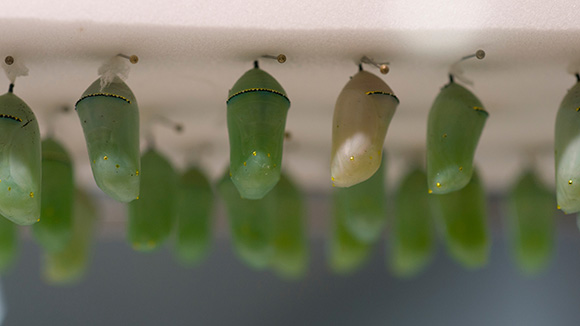
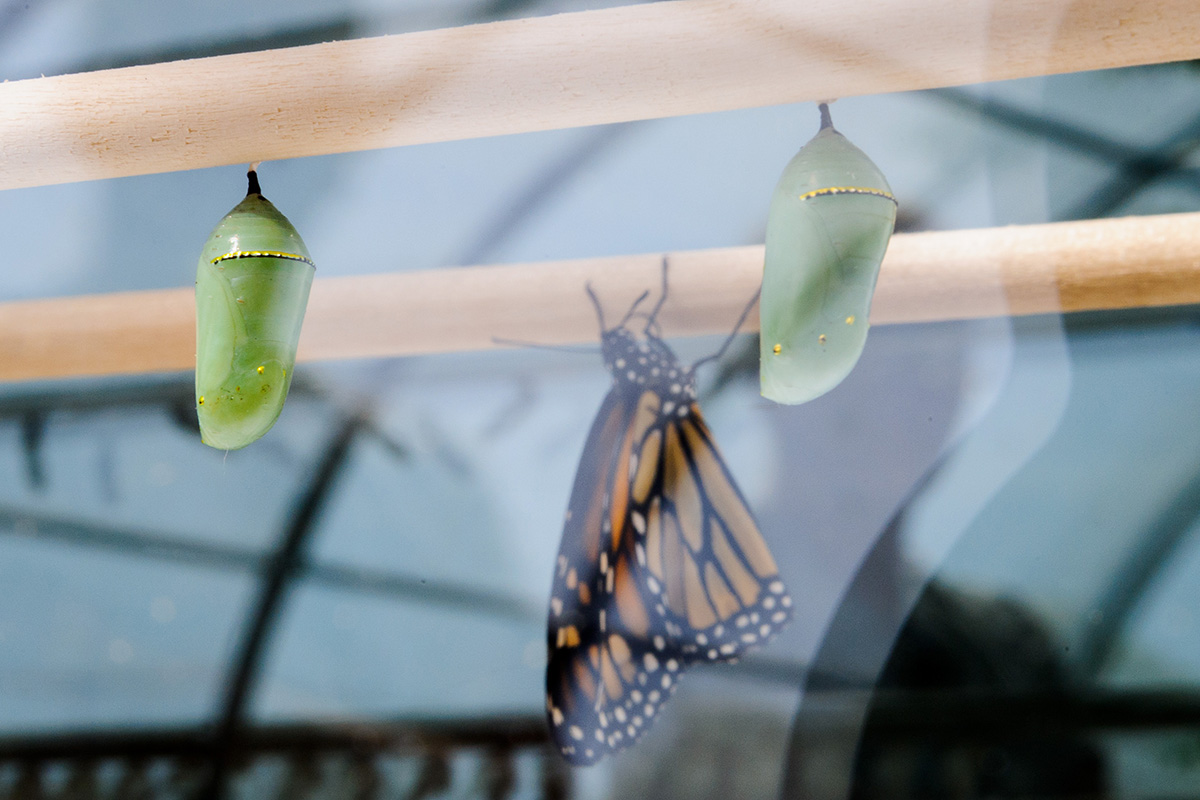
Diapause—Here in the Midwest, many people wonder how butterflies survive the winter. The answer is diapause. Chrysalids can feel and respond to the temperature outside of their protective exoskeletons. If they notice a few cold nights, they will react by going into a dormant phase called diapause. When this happens, they cease development, and the shell of the chrysalis will turn brown and harden; this is how they survive the overwintering. Many pupae are green in order to blend in with the surrounding foliage, so it makes sense that they would turn brown in the winter to blend in with the dead, brown foliage. When the warmth and light of spring return, they become green again and complete their metamorphosis into adult butterflies.
One of these Danaus chrysippus chrysalids is not like the others. Did it begin to enter diapause during shipment? Or did this African queen butterfly begin its pupation in an area without typical greenery? We are still learning ourselves.
Eclosion—Here at Butterflies & Blooms, we normally refer to our butterflies as “emerging” or even “hatching” from their pupal state. The correct scientific term for this is actually “eclosion.” If you want to impress (or possibly annoy) your friends, tell them that when chrysalids complete their diapause, they resume metamorphosis, and eclose into adult imagos!
Frugiverous—Butterflies such as the ever popular blue morpho, giant owl, and the great orange deadleaf are frugiverous; they come from habitats where there aren’t many wildflowers available, so they turn to feeding solely on fruit instead. This is why we have trays of fermented fruit in the exhibit.
A selection of watermelon, banana, grapefruit, and orange slices are an attractive source of food to frugiverous butterflies like this monarch.
Generalist vs. Specialist—Some butterflies are successful because they “specialize” in certain plant families. This means that their success is somewhat tied to the success or failure of the particular plant they evolved to rely on. This is the case for monarch butterflies. Monarchs have evolved to rely on plants in the milkweed (Asclepias) family as both a nectar source and host plant on which to lay eggs. Although there are many different types of milkweed, this is still considered a niche. On one hand, this can be a benefit, because the monarch can capitalize on the unique benefits that come from plants in the milkweed family. On the other hand, if milkweed declines, monarchs don’t have any alternative plant families to use as hosts.
Generalists, such as the painted lady, can use a wide variety of plants families to lay eggs on, such as carrots, mints, and nettles. This ensures that they will always be able to find suitable host plants. Humans are also generalists, as we are able to use a wide variety of food sources and habitats.
Imago—While we simply refer to our butterflies as “adults,” the true term for the final stage of butterfly development is “imago.” The life stages of a butterfly are egg, caterpillar (larvae), chrysalis (pupae), and adult (imago). Interestingly, the term “imago” also refers to a human individual’s idealized image of himself or herself. What’s your personal imago?
Lekking—This is a very interesting term, because until the blue morpho was discovered, lekking was not thought to be a behavior found in butterflies. Lekking is a type of mating ritual in which all the males form a group and compete, showing off their most admirable features. The males with the right stuff will be the ones who get to mate and pass on their genes. With blue morphos, only the most colorful males will get this privilege. I once witnessed a group of blue morphos “lekking” at Butterflies & Blooms. A group of about ten males were hypnotically circling around a single female. I couldn’t believe my eyes!
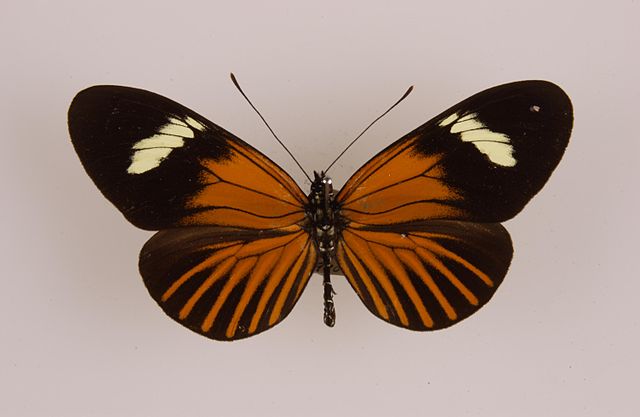
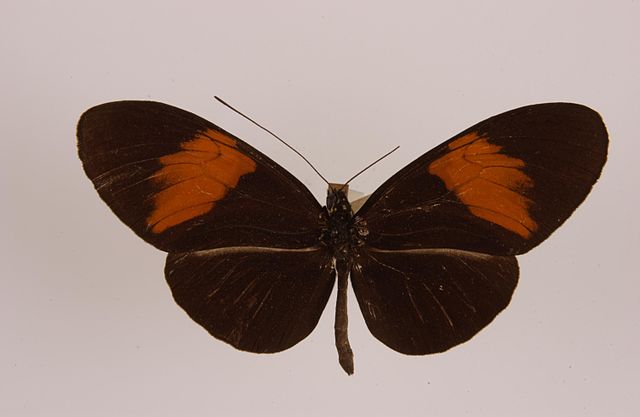
Polymorphism—Some of our butterfly species display polymorphism, including the mocker swallowtail and the postman. This means that within the species, the wings can have numerous pattern variations. This can make their identification tricky. The postman butterfly (Heliconius melpomene) is intensely studied by Lepidopterists because its patterning is more variable than any other butterfly species on earth. Here at Butterflies & Blooms, we have observed at least four distinct patterns from this one species of butterfly. Some have a white “skirt” along the bottom of their hind wings, some have a red spot on each forewing, and yet others have a pair of red spots on each wing.
Heliconius melpomene aglaope
Heliconius melpomene melpomene
Heliconius melpomene amaryllis
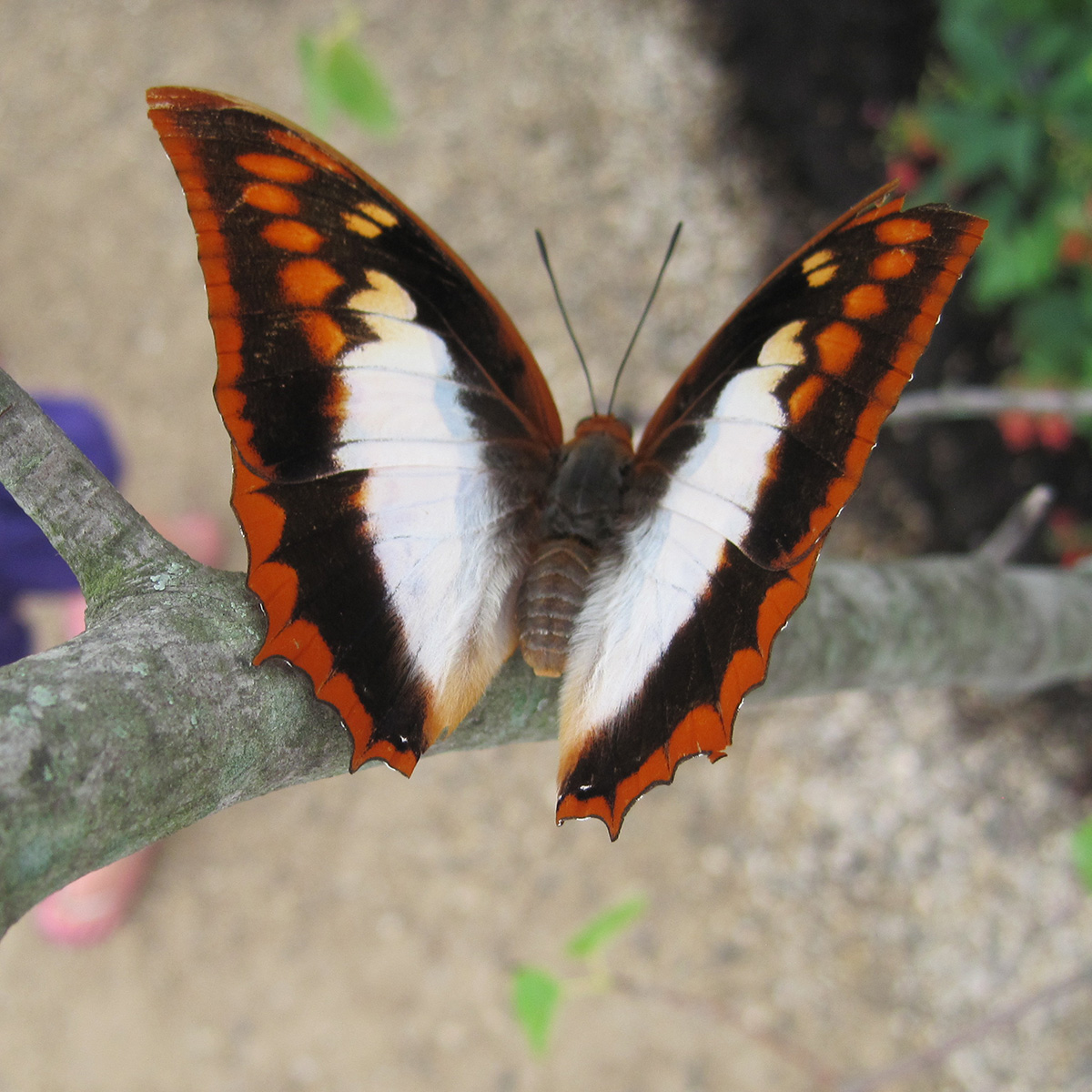
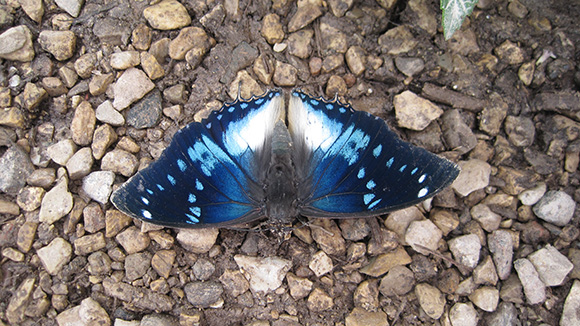
Puddling—Puddling is the tendency of butterflies to sit in wet soil or stone and extract the minerals from the ground. Apparently, puddling is somewhat exclusive to male butterflies, because they need these minerals for sperm production. This is also why the butterflies (especially males) land on visitors. They drink our sweat to obtain these precious salts, sometimes absorbing them directly through a t-shirt!
A blue-spotted charaxes (Charaxes cithaeron) puddles in gravel after a brief rain shower
Sexual Dimorphism—Butterflies tend to have different color and sizes based on whether they are male or female. This phenomenon is known as sexual dimorphism. Because female butterflies lay eggs, they tend to be a bit larger than the males. The males tend to have richer coloration and/or bolder patterns. Just like birds and fish, females will tend to choose the males with the boldest colors, as this indicates healthy genes.
Male leopard lacewing (Cethosia cyane)
Female leopard lacewing (Cethosia cyane)
These are just a handful of terms I like to use when talking about our amazing collection of butterflies. Expect to be quizzed on them during your next visit to Butterflies & Blooms!
Postman comparison images by Notafly (self-made Own photograph.Studio.Nikon.) [CC BY-SA 3.0 or GFDL], via Wikimedia Commons
At the Chicago Botanic Garden’s Butterflies & Blooms exhibition, I receive a wide variety of questions about butterfly physiology. My favorite questions are ones that don’t have a substantiated answer, only theories posited by lepidopterists (or those who study butterflies and moths). I always enjoy these questions, since they are on the cutting edge of scientific understanding.
One such question is: “What are those specs of gold on the monarch butterflies?” The short answer is “Nobody knows!” But there are a few interesting theories.
Lepidopterists approach strange features such as metallic markings by asking, “What sort of advantage would this feature give to the butterfly?” Every trait found in nature exists because it gave that individual more opportunities to reproduce. Perhaps the trait helps keep the butterfly from being eaten, or it gives a male butterfly bright colors to impress the ladies, or perhaps it allows the butterfly to utilize new food sources when nectar isn’t available.
When butterflies emerge from their chrysalids, they are very vulnerable to predators like birds, since they can’t move. Their only defense is to display colors and patterns that either signal poison or blend into the environment. That means the features we see on chrysalids are no accident, as they offered an advantage and were subsequently passed down.
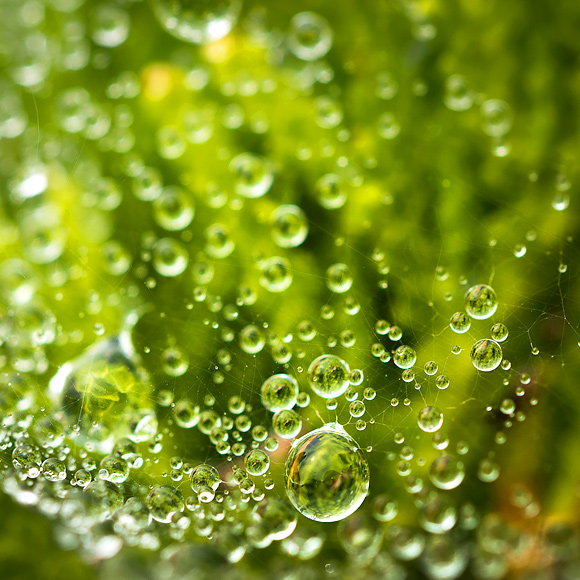
Camouflage is the prevailing theory as to why chrysalids sometimes have metallic spots, but wouldn’t a bright spec stick out like a sore thumb? One theory is that the specs imitate the iridescent glistening drops of dew on a leaf in the morning or after a rain.
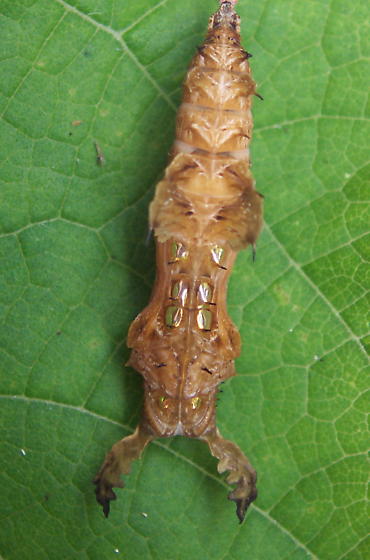
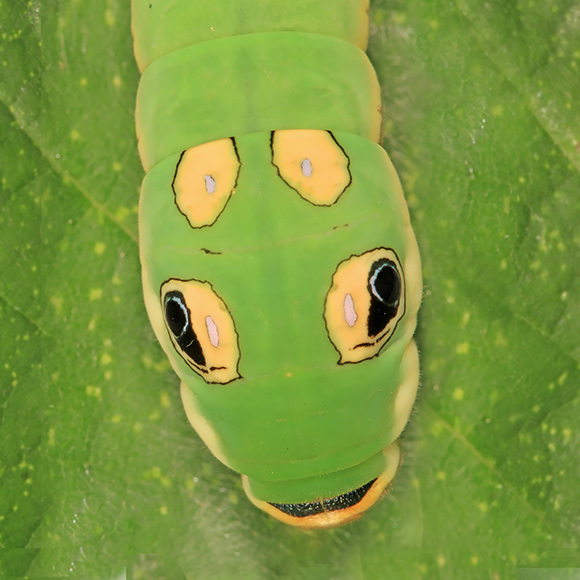
Another theory is that the gold specs are a way of the pupae shouting, “I’m poisonous! Leave me alone or you’ll be sorry!” In the world of insects, reds, oranges, and yellows universally indicate poison, whether the insect is actually poisonous or not. Many insects, including butterflies and their pupae, use this trick to their advantage. My favorite trick is when a chrysalis has evolved to look just like a little snake. Imagine how shocked a bird or a bat would be when it discovers it’s next meal might actually make a meal out of it instead!
Butterflies have adapted a variety of techniques to ward of predators while pupating, such as mimicking snakes or simply blending in. Photo by Judy Gallagher via Wikimedia Commons
One theory for the gold and silver spots found on chrysalids is to mimic water droplets.
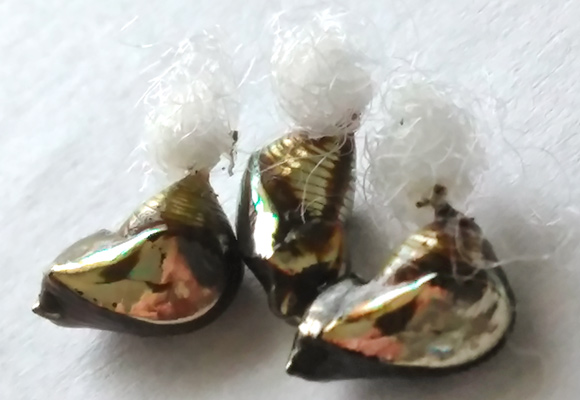
While monarchs and longwing butterflies have gold specs, we often have species of butterflies that decided to have even more swagger by making their chrysalids appear to be solid gold. Guests often compare them to exotic gold jewelry. These pupae are so shiny, you can clearly see your own reflection in them—and that’s the point. What better way to blend into your habitat than to literally mirror it? This is the prevailing scientific theory, anyway.
Pupae that are fully metallic are thought to blend in by literally mirroring their surroundings. You can actually see my phone and hands reflected in the chrysalids.
When you see a metallic spot on a butterfly chrysalis, you are seeing yellow and orange pigments, but it’s the intricate microscopic structure of the outer chrysalis that gives it its metallic sheen. This is where things get a bit more complicated. Entomologists refer to the outer surface of metallic chrysalids as “multiple endocuticular thin alternating layers.” That’s quite a mouthful, so they call it M.E.T.A.L. for short. The acronym fits perfectly.
Here’s another way to think of what you are seeing: Imagine a butterfly’s chrysalis as several thinly stacked layers of windows. When sunlight hits these windows, they absorb and reflect light, giving a glimmering effect.
In each phase of a butterfly’s life cycle, it is extremely vulnerable to being eaten. From slow, plump caterpillars to immobilized chrysalids to paper-thin, delicate adults, they’ve found ingenious ways to survive and reproduce. Come to Butterflies & Blooms and see for yourself.
It’s finally spring (and practically summer) weather these days at the Chicago Botanic Garden, and we’re bursting to get outside, and get growing.
In just a few weeks, we’ll have the perfect chance to do just that. At Get Growing Weekend on May 18 to 20, gardeners will gather for gardening demonstrations, a spring marketplace, and a one-of-a-kind plant sale to celebrate the much-anticipated arrival of spring.
Part of the weekend’s festivities include a specialty plant sale hosted by The Woman’s Board of the Chicago Horticultural Society. On Friday, members of the Garden will enjoy early access to the plant sale from noon to 4 p.m.; the plant sale will open to the public on Saturday and Sunday. A highlight of the sale is the “potted paradise” selection, which features composed planters grown on-site and designed by horticultural celebrities, as well as our own staff and Woman’s Board members.
We couldn’t wait to get a sneak peek, so we talked with celebrated designer Bunny Williams of Bunny Williams Interior Design about her potted paradise design.
Q: Describe your process for designing your container this year. What makes a good container?
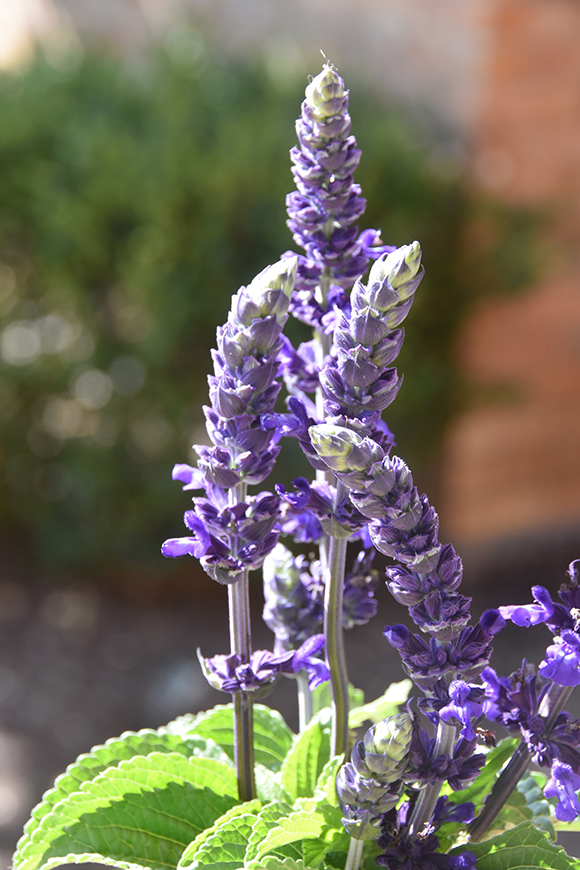
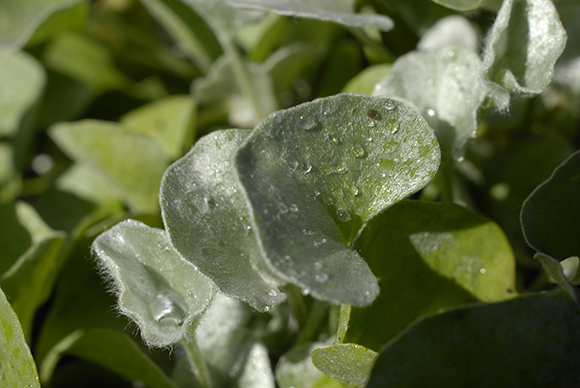
A: One of the things I’m always thinking about when I’m doing a container is height. When you first plant a container, all of the plants are very small. But a month later when they’ve grown in, they’re at their full profusion. They look quite different. You have to think in advance about plants growing to varying heights. For instance, I always like to have something that hangs over the sides of the container, like the Silver Falls dichondra (Dichondra argentea ‘Silver Falls’) that I’ve included in my Potted Paradise container. And then something that stands tall, like the Mystic Spires Improved salvia (Salvia ‘Balsamispim’).
Q: What colors work well in a container?
A: I always like to use a simple color palette in containers. For this one, it’s all about shades of purple, black, and green. It makes for a more effective container than if you try to put too many colors in it. In your garden, you often mix containers together, so if you have containers with their own color schemes situated next to each other, you can have a more controlled color scheme overall.
Q: How do you use texture in your containers?
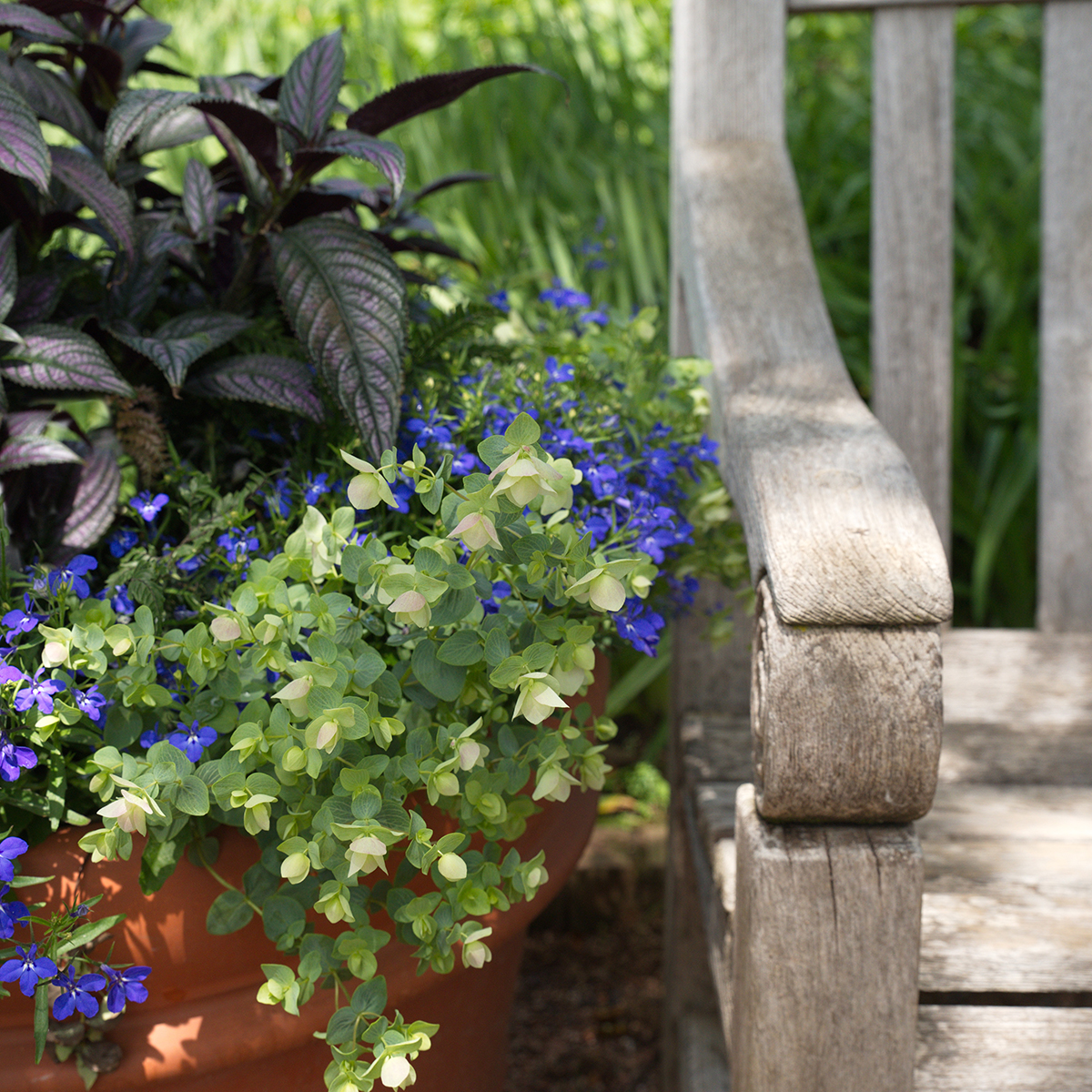
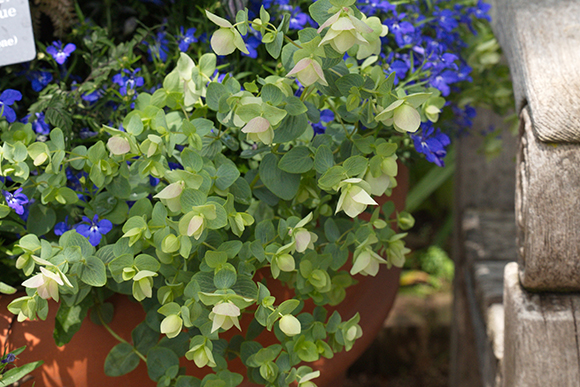
A: You don’t want every leaf to be exactly the same. In my Potted Paradise container, there are six plants, each with different leaf textures. I chose Mystic Spires Improved salvia (Salvia ‘Balsamispim’), Pinball™ globe amaranth (Gomphrena globosa ‘Pinball Purple’), Primo™ Black Pearl coral bells (Heuchera ‘Black Pearl’), Solar Power™ sweet potato vine (Ipomoea batatas ‘Black Improved’), Silver Falls dichondra (Dichondra argentea ‘Silver Falls’), and Kent Beauty oregano (Origanum rotundifolium ‘Kent Beauty’). The different textures set the plants off when you see the relationship between the different foliage. It makes the container more interesting if something is not in bloom.
Salvia ‘Balsamispim’ Mystic Spires Blue™ Improved
Dichondra ‘Silver Falls’Origanum ‘Kent Beauty’; photo by Paul S. Drobot
Q: What’s the best thing about planting containers?
A: What’s interesting and fun about containers is you have to know a little bit about what each plant is going to do. The salvia is tall, and so I know that will be the centerpiece of my container. When you go to the nursery, I enjoy making a grouping right there in the store. You can see the textures together, and choose what makes sense based on a few basic principles: leaf texture, differentiation, and colors of the same family.


 Where does broomcorn come from?